
Publishing Made Simple: A Beginner’s Guide for First-Time Authors
Congratulations—you’ve completed your manuscript! Whether it’s taken months or years, countless early mornings or late nights, you’ve accomplished what many dream of but few achieve: finishing a book. Now comes the next challenge: navigating the often bewildering world of publishing. For first-time authors, the publishing process can feel overwhelming, filled with unfamiliar terminology, conflicting advice, and crucial decisions that seem to require expertise you haven’t yet developed. This beginner’s guide cuts through the complexity to provide clear, actionable guidance for turning your manuscript into a published book. We’ll walk through the fundamental steps, explain essential concepts in plain language, and help you make informed decisions that align with your goals and resources. Publishing doesn’t have to be complicated—with the right information and realistic expectations, you can successfully bring your book to readers. Step 1: Ensuring Your Manuscript Is Truly Ready The single most common mistake first-time authors make is rushing to publish before their manuscript is genuinely ready. The excitement of finishing a draft often creates urgency to immediately share your work with the world, but premature publication can permanently damage your author reputation and make your book’s eventual success much harder to achieve. The Revision Process: Beyond Your First Draft Your completed first draft is exactly that—a first draft. Professional authors typically revise their manuscripts 3-5 times or more before considering them publication-ready. Each revision pass serves different purposes: Structural Revision examines big-picture elements—plot logic in fiction, argument flow in non-fiction, pacing, chapter organization, and whether the book delivers on its premise. This stage might involve reordering chapters, cutting unnecessary sections, adding missing content, or reconsidering character arcs and story structure. Many writers find it helpful to set manuscripts aside for several weeks between finishing the first draft and beginning structural revision, allowing fresh perspective on their work. Scene-Level and Paragraph Revision zooms in to examine individual scenes or sections. Does each scene advance the story or argument? Can paragraphs be tightened? Are there repetitive sections? This stage refines prose, strengthens individual components, and ensures every element serves a purpose. Line Editing focuses on sentence-level craft—clarity, rhythm, word choice, and style consistency. This is where good writing becomes great writing, where you eliminate clichés, vary sentence structure, and polish prose until it shines. Self-Editing Tools and Techniques: Reading your manuscript aloud reveals awkward phrasing and rhythm problems that silent reading misses. Tools like ProWritingAid or Grammarly can catch technical errors and identify patterns like overused words or passive voice, though they should supplement rather than replace human judgment. Beta Readers: Your First Real Audience Beta readers—trusted readers who provide feedback before publication—offer invaluable perspective. They experience your book as readers rather than writers, identifying confusion, pacing problems, or sections that don’t land as intended. Ideal beta readers match your target audience demographic and reading preferences. Provide specific questions guiding their feedback: “Did the ending feel rushed?” “Was the protagonist’s motivation clear?” “Were there sections that dragged?” General reactions help, but targeted questions yield more useful feedback. Professional Editing: Non-Negotiable Investment No matter how skilled you are or how many times you’ve revised, professional editing is essential. You’re too close to your work to catch all issues, your mind fills in missing words or glosses over errors you’ve read dozens of times, and you lack the objective distance professional editors bring. Developmental Editing (sometimes called substantive or content editing) addresses big-picture issues—structure, pacing, character development, argument logic. Developmental editors help shape your manuscript into the best version of itself, identifying strengths to emphasize and weaknesses requiring attention. Line Editing refines prose style, improving clarity, flow, and readability at the sentence and paragraph level. Line editors enhance your voice rather than replacing it. Copyediting catches grammatical errors, punctuation mistakes, spelling errors, and inconsistencies in facts, names, or timeline. Copyeditors ensure technical correctness. Proofreading provides the final check after formatting, catching any errors introduced during layout or missed in previous editing stages. Budget determines how much professional editing you can afford, but at minimum, invest in copyediting. Many authors skip developmental editing (especially if they’ve worked with critique partners or writing groups), but attempting to skip copyediting is false economy that results in poorly received books. Step 2: Understanding Your Publishing Options First-time authors face three primary publishing paths: traditional publishing, self-publishing, and hybrid publishing. Each offers distinct advantages and challenges. Traditional Publishing: The Gatekept Path Traditional publishing means a publishing house acquires rights to publish your book, handles all production and distribution costs, and pays you royalties on sales (and often an advance against those royalties). Advantages include no upfront author costs, professional editing and design, bookstore distribution, potential marketing support, and the validation and credibility of being traditionally published. Challenges include difficulty breaking in (acceptance rates typically 1-3%), long timelines (often 2-3 years from acceptance to publication), lower per-book royalties (7.5-15% typically), limited creative control, and the necessity of working with literary agents for most publishers. The Process: For most traditional publishers, you need a literary agent who pitches your manuscript to acquiring editors. This requires crafting a query letter, synopsis, and sample chapters that convince agents your book has commercial potential. If an agent offers representation, they submit your manuscript to publishers. If a publisher offers a contract, the agent negotiates terms, then the lengthy publication process begins. Traditional publishing suits authors prioritizing wide bookstore distribution, validation from industry gatekeepers, and who have patience for long timelines and willingness to accept less creative control. Self-Publishing: The Entrepreneurial Path Self-publishing means you function as the publisher, retaining complete control while assuming all responsibilities and costs. Modern platforms like Amazon’s Kindle Direct Publishing, Draft2Digital, and IngramSpark have made self-publishing accessible to anyone. Advantages include complete creative control, much higher royalty rates (35-70% typically), rapid time-to-market (weeks rather than years), permanent book availability, and flexibility to experiment with pricing and marketing. Challenges include all upfront costs falling on the author ($2,000-$5,000+ for professional services), complete responsibility for marketing, administrative burden of running a small publishing business, and ongoing stigma in some circles about self-published quality. The Process: You hire and manage all
The Future of Events: How Publishers & Education Brands Can Connect, Inspire & Grow
The landscape of events for publishers and educational brands has undergone seismic shifts over recent years, accelerated by technological advancement, changing audience expectations, and global disruptions that forced immediate innovation. What emerged from this transformation is not merely a return to “normal” but an evolution toward more dynamic, accessible, and impactful event experiences that transcend traditional boundaries of geography, format, and engagement. Publishers and education brands now stand at an inflection point where the future of events promises unprecedented opportunities to connect with audiences, inspire communities, and drive sustainable growth. This comprehensive exploration examines emerging trends, innovative formats, technological enablers, and strategic approaches that will define successful event strategies for publishing and education sectors in the years ahead. The Hybrid Revolution: Best of Both Worlds The most significant shift in event strategy is the emergence of hybrid events as the new standard rather than temporary accommodation. Hybrid events—combining in-person experiences with virtual participation—offer compelling advantages that neither purely physical nor entirely digital events can match. Expanded Reach and Accessibility: Hybrid formats dramatically expand potential audience size by eliminating geographical barriers. A book launch in Mumbai can engage readers in Bangalore, Delhi, and internationally without travel requirements. Educational seminars reach learners across rural and urban areas equally. This democratization of access aligns perfectly with publishing and education missions to broadly disseminate knowledge. Flexibility and Inclusivity: Hybrid events accommodate diverse participation preferences and circumstances. Parents managing childcare, professionals with demanding schedules, individuals with mobility limitations, or those simply preferring digital interaction can all engage meaningfully. This inclusivity expands market reach while demonstrating commitment to accessibility. Data and Engagement Insights: Digital components of hybrid events generate rich data about attendance patterns, engagement levels, content preferences, and audience demographics. Publishers and education brands can leverage these insights to refine content strategies, personalize marketing, and improve future events. Understanding which sessions drive longest engagement or which topics generate most questions informs content development decisions. Extended Lifecycle and Content Repurposing: Hybrid events create valuable content assets extending far beyond the live event. Recorded sessions become on-demand resources, excerpts transform into social media content, transcripts become blog posts, and highlights generate promotional materials for future events. This content multiplication amplifies return on event investment dramatically. Successful hybrid execution requires thoughtful design ensuring neither in-person nor virtual audiences feel like afterthoughts. Both experiences must deliver value, interaction, and connection appropriate to their format. Publishers hosting author readings might feature live audience Q&A while enabling virtual participants to submit questions via chat. Educational webinars could incorporate breakout discussions for in-person attendees and themed chat channels for digital participants. Immersive and Experiential Event Formats The future of events moves beyond passive content consumption toward immersive experiences that engage audiences emotionally, intellectually, and socially in memorable ways. Interactive Workshops and Hands-On Learning: Educational brands increasingly favor workshop formats over traditional lectures. Participants don’t just hear about concepts—they practice skills, solve problems collaboratively, and create tangible outputs. Publishers can adapt this approach through writing workshops where attendees draft passages, book discussion formats encouraging analytical engagement, or creativity sessions exploring themes from published works. Gamification and Competitive Elements: Incorporating game mechanics—challenges, points, leaderboards, achievements—transforms events into engaging experiences. Educational publishers might create quiz competitions around textbook content, literary publishers could design mystery-solving activities based on thriller novels, or academic conferences might include research presentation competitions with peer voting. Augmented and Virtual Reality Experiences: As AR and VR technologies become more accessible, forward-thinking publishers and education brands experiment with immersive storytelling and learning environments. Historical textbook publishers could offer VR experiences transporting students to historical periods. Children’s book publishers might create AR apps bringing characters to life during story readings. While still emerging, these technologies represent significant future opportunities. Multi-Sensory Engagement: Events engaging multiple senses create more memorable experiences. Book launches might feature music reflecting the book’s themes, scents evoking the setting, or tastings of foods mentioned in the narrative. Educational events could incorporate tactile materials, visual demonstrations, and auditory elements that reinforce learning through multiple pathways. Micro-Events and Continuous Engagement Strategies Rather than concentrating energy into a few large annual events, the future favors more frequent, smaller-scale engagements that maintain continuous audience connection. Weekly or Monthly Virtual Gatherings: Regular smaller events—weekly author Q&As, monthly topical discussions, bi-weekly skill-building sessions—keep audiences engaged between major events. These micro-events require less production investment while building community and maintaining mindshare. Educational brands might offer weekly “office hours” where learners access expert guidance. Publishers could host monthly genre-specific book clubs creating ongoing reader communities. Pop-Up Events and Flash Engagements: Spontaneous, limited-notice events create excitement through urgency and exclusivity. A publisher might announce a surprise author appearance 48 hours in advance, or an education brand could offer a flash masterclass on trending topics. These unexpected opportunities reward engaged followers and generate social media buzz. Series-Based Event Structures: Rather than standalone events, organizing events into related series creates narrative continuity encouraging sustained participation. A publisher launching a trilogy might host events timed to each book release, building anticipation and rewarding series followers. Educational brands could offer skill progression series where each event builds on previous learning. Community-Driven Events: Empowering audiences to organize and lead events under your brand umbrella extends reach while building leadership within communities. Publishers can support reader-organized book clubs, fan conventions, or discussion groups. Education brands might enable peer learning sessions or student-led study groups that maintain connection to your brand while requiring minimal organizational resources. Personalization and Segmented Event Strategies One-size-fits-all events increasingly give way to personalized experiences tailored to specific audience segments with distinct interests, needs, and engagement preferences. Demographic-Specific Programming: Creating events designed for particular demographics—teens, working professionals, retirees, parents, educators—enables more relevant content and appropriate engagement approaches. A publisher might host separate events for young adult readers versus adult literary fiction enthusiasts. Educational brands could offer differentiated programming for K-12 educators versus higher education faculty. Interest-Based Micro-Communities: Within broader audiences, identifying micro-communities around specific interests or needs enables highly targeted events. Science fiction readers, historical non-fiction enthusiasts, or poetry lovers each appreciate
Balancing AI and Human Creativity: How Generative Tools Shape Modern Content Strategy

The creative landscape has transformed dramatically over the past few years, with generative AI tools emerging as both collaborator and catalyst in content creation. For writers, marketers, and creative professionals, these technologies present a paradox: they offer unprecedented efficiency and capability while simultaneously raising fundamental questions about authenticity, originality, and the irreplaceable nature of human creativity. At LiteraryLounge, we’ve spent considerable time exploring this intersection, working with authors and content creators to integrate AI tools thoughtfully while preserving the distinctive human voice that makes content resonate with audiences. The question is no longer whether to use AI in content strategy—these tools have become too powerful and pervasive to ignore—but rather how to leverage them effectively while maintaining creative integrity and authentic connection with readers. This exploration examines the current state of generative AI, its practical applications in content creation, the essential role of human creativity, and strategies for achieving balance that amplifies rather than diminishes human creative potential. The Current State of Generative AI in Content Creation Generative AI has progressed from novelty to necessity in remarkably short time. Large language models can now produce coherent, contextually appropriate text across genres and formats. Image generation systems create visual content from text descriptions. Audio tools generate music, sound effects, and even synthesized voices that approach natural human speech. These capabilities continue advancing at accelerating pace, with each generation of models demonstrating improved understanding, nuance, and creative capacity. For content creators, these tools offer practical capabilities that were inconceivable just years ago. A blog post that once required hours of research and writing can now be drafted in minutes. Marketing copy variations that would have demanded days from a copywriting team can be generated and tested within hours. Writers struggling with specific passages can explore multiple approaches quickly, breaking through creative blocks that might otherwise stall projects for days. At LiteraryLounge, we’ve observed that successful creators approach these tools not as replacements for human creativity but as powerful assistants that handle specific tasks within larger creative processes. The most effective applications augment human capabilities rather than attempting to automate creativity entirely. This distinction—augmentation versus automation—fundamentally shapes how AI integration succeeds or fails in content strategy. Practical Applications: Where AI Excels in Content Work Understanding where generative AI tools genuinely excel helps creators deploy them strategically rather than expecting universal solutions to every creative challenge. Research and Information Synthesis: AI models trained on vast corpora of text can quickly synthesize information across topics, providing starting points for deeper research. Rather than spending hours gathering basic information, creators can prompt AI systems to provide overviews, identify key concepts, or suggest angles for exploration. This accelerated research phase frees time for more valuable work—analysis, original thinking, and creative synthesis that remains distinctly human territory. Ideation and Brainstorming: When creativity feels stuck, AI can generate numerous alternatives, variations, and unexpected combinations that spark new directions. Need twenty headline options for a blog post? Exploring different approaches to a story opening? Considering various angles for a marketing campaign? AI systems excel at producing volume and variety, creating raw material that human judgment can then evaluate and refine. Drafting and Iteration: First drafts often represent the most psychologically difficult phase of writing—facing the blank page and producing initial imperfect words. AI can generate rough drafts that provide structure and starting points, which human creators then substantially revise, refine, and infuse with genuine insight and voice. This approach leverages AI’s speed while ensuring human creativity shapes final output. Format Adaptation and Repurposing: Transforming content across formats—blog posts to social media snippets, long-form articles to email newsletters, written content to video scripts—represents time-consuming but necessary work. AI handles these mechanical transformations efficiently, adapting content structure and style to different platforms while preserving core messages. Technical and SEO Optimization: AI tools analyze content for search engine optimization opportunities, readability improvements, and technical enhancements. They identify keyword opportunities, suggest structural improvements for better scanning and comprehension, and flag potential issues before publication. Personalization at Scale: Creating personalized content variations for different audience segments manually is prohibitively time-consuming. AI enables mass personalization, adjusting tone, examples, and emphasis to resonate with specific demographics while maintaining brand consistency. At LiteraryLounge, we guide creators toward AI applications that genuinely save time without compromising authenticity. The key is selecting use cases where AI handles mechanical or volume-intensive tasks, freeing human creators for work requiring genuine creativity, emotional intelligence, and strategic thinking. The Irreplaceable Human Elements: What AI Cannot Replicate Despite impressive capabilities, generative AI exhibits fundamental limitations that underscore why human creativity remains essential to content that genuinely connects with audiences. Lived Experience and Authentic Perspective: AI models synthesize patterns from training data but possess no lived experience, personal perspective, or authentic point of view. They cannot draw from childhood memories, professional expertise accumulated over decades, or the specific combination of experiences that makes each human creator unique. Content that resonates most powerfully emerges from authentic personal experience—the specific details, emotional truths, and hard-won insights that AI cannot access or fabricate convincingly. Emotional Intelligence and Empathy: While AI can identify emotional patterns in text and generate emotionally appropriate language, it lacks genuine emotional understanding. It cannot truly empathize with reader struggles, celebrate their victories, or understand the nuanced emotional needs different audiences bring to content. Human creators possess intuitive understanding of how words affect emotions, which stories comfort versus challenge, and how timing and context shape emotional resonance. Strategic Judgment and Contextual Understanding: Content strategy requires understanding business goals, brand identity, competitive landscape, and audience psychology in ways that inform every creative decision. AI lacks the strategic judgment to know which topics advance business objectives, which messages strengthen brand positioning, or which approaches differentiate from competitors. These strategic choices demand human intelligence that considers multiple variables AI cannot integrate effectively. Ethical Reasoning and Values Alignment: Content creation involves constant ethical decisions: Is this claim substantiated? Does this language respect audience dignity? Are we representing diverse perspectives fairly? Does this content serve readers’ genuine interests versus manipulating
Inside a Book Launch: What to Expect & Creative Event Ideas
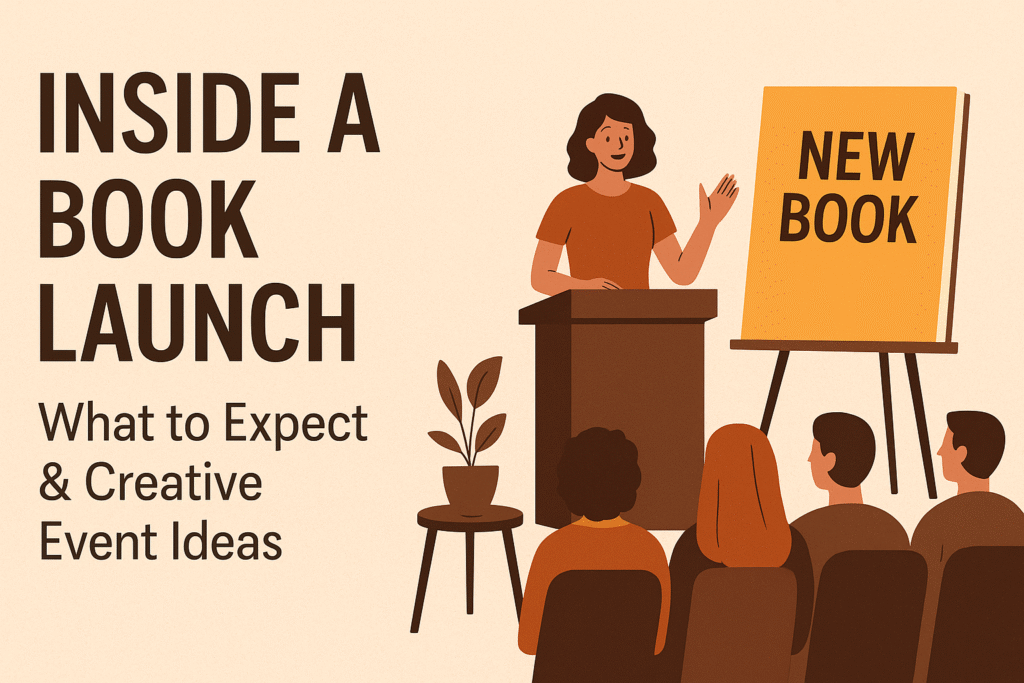
The moment you’ve been working toward has finally arrived—your book is ready to meet the world. A book launch represents more than just a publication date on a calendar; it’s an opportunity to celebrate your achievement, connect with readers, generate buzz, and set your book on a trajectory toward success. Whether you’re a first-time author wondering what to expect or a seasoned writer looking to reinvigorate your launch strategy, understanding the anatomy of a successful book launch and exploring creative event possibilities can transform your release from a quiet debut into a memorable cultural moment. At LiteraryLounge, we’ve orchestrated hundreds of book launches across genres, formats, and budgets. We’ve seen what works, what falls flat, and what unexpectedly becomes the highlight everyone remembers. This comprehensive guide takes you inside the book launch process, from planning timeline to post-event follow-up, while offering creative ideas that will make your launch distinctly yours. The Launch Timeline: Planning for Success A successful book launch doesn’t materialize in the week before publication—it requires strategic planning beginning months in advance. At LiteraryLounge, we recommend authors start launch planning at least three to four months before the publication date, creating a timeline that builds momentum systematically. Three to Four Months Out: This is when fundamental decisions happen. Will your launch be in-person, virtual, or hybrid? What’s your budget? Who’s your target audience for the event? Begin reaching out to potential venues if planning an in-person event, as popular locations book months ahead. Start building your advance reader team—readers who’ll receive early copies in exchange for reviews and word-of-mouth promotion. Create your email campaign sequence announcing the upcoming release and building anticipation. Two Months Before Launch: Finalize event details including venue contracts, virtual platform subscriptions, or hybrid technology requirements. Send invitations to VIP guests, local media, book bloggers, and influencers. Begin promoting the launch date through social media teasers, revealing the cover, sharing early reviews, and building countdown excitement. Coordinate with bookstores for pre-orders and signed copy availability. If you’re doing a virtual component, test technology thoroughly—audio quality, camera angles, internet bandwidth, and platform features. One Month Out: Ramp up promotional efforts across all channels. Confirm RSVPs for in-person events to estimate attendance for catering and seating. Prepare your launch day materials: bookmarks, postcards, swag, or promotional items you’ll distribute. Write and practice your reading selection and speech—you’ll want to sound natural rather than nervous. Coordinate final details with venue staff, caterers, booksellers, or technical support teams. At LiteraryLounge, we create detailed day-of checklists ensuring nothing falls through the cracks during the excitement of launch day. Launch Week: Final promotional push through social media, email newsletters, and any media appearances secured. Confirm all logistics one last time. Rest adequately—you’ll want energy and presence for your big day. What to Expect: The Anatomy of Launch Day Understanding what typically happens during a book launch helps you prepare mentally and logistically for the experience. While every launch is unique, certain elements remain consistent across successful events. Pre-Event Setup: Whether at a bookstore, library, restaurant, or virtual platform, arrive early to oversee setup. For in-person events, this means arranging seating, testing microphones, positioning book displays, setting up signing areas, and creating welcoming atmosphere through lighting, music, or decorations. For virtual events, log in at least 30 minutes early to test audio/video, check your background, verify screen sharing functions, and ensure backup plans exist if technology fails. Welcome and Introduction: Most launches begin with a welcome from the host—whether you, a venue representative, or a friend serving as emcee. This introduction sets the event’s tone, thanks attendees for coming, and provides context about the book and author. Keep introductions brief and engaging; attendees came to hear about the book, not lengthy preambles. The Reading: This centerpiece of most book launches lets your words speak for themselves. Select a passage that stands alone narratively while showcasing your writing style—typically 10-15 minutes of reading time. Practice beforehand to maintain pacing, emphasize key moments, and avoid stumbling. For fiction, choose a scene with tension, emotion, or humor that hooks listeners. For non-fiction, select content that delivers value or reveals fascinating insights. Author Talk: After the reading, share your journey writing the book. What inspired it? What challenges did you face? What do you hope readers take away? This personal connection transforms you from an abstract author name into a real person readers feel invested in supporting. Keep it conversational and authentic—people connect with vulnerability and humor more than polished marketing speak. Q&A Session: Opening the floor to questions creates interactive energy and lets readers engage directly. Plant a few friendly faces with prepared questions in case audience members are initially shy. Questions might range from writing process inquiries to character inspirations to sequel plans. Be gracious with every question, even ones you’ve answered a hundred times—it’s new to this asker. Book Signing: The signing line represents individual connection time with each reader. Personalize inscriptions, express genuine gratitude, and take time for brief conversations. These moments create devoted fans who’ll evangelize your work. Have bookmarks or promotional materials available for people to take. At LiteraryLounge events, we ensure signing areas have adequate table space, good lighting, and efficient flow to prevent bottlenecks while maintaining intimate interactions. Closing and Networking: As formal programming concludes, informal networking begins. Attendees mingle, take photos, exchange contact information, and discuss the book. This organic community-building often produces the most meaningful connections of the event. Creative In-Person Launch Ideas While traditional bookstore readings remain valuable, creative approaches can make your launch unforgettable and more aligned with your book’s themes or personality. Themed Immersive Experiences: Transform your launch space to reflect your book’s setting or themes. For a mystery novel, host at a speakeasy with 1920s décor and period music. A cookbook launch could occur in a restaurant with tastings of featured recipes. A fantasy novel might inspire medieval banquet styling. LiteraryLounge worked with an author whose historical fiction launch at a museum included costumed actors recreating scenes from the book—attendees still
How to Write Beautiful Sentences: 15 Techniques for Clarity & Style
Writing beautiful sentences is both an art and a craft. At LiteraryLounge, we believe that every sentence you write has the power to captivate, engage, and inspire your readers. Mastering sentence clarity and style leads to writing that resonates, flowing effortlessly from thought to reader’s mind. Here are 15 essential techniques to help you craft sentences that are clear, vivid, and stylish. 1. Prioritize the Subject Make the subject of your sentence the star by placing it early and clearly. Active voice highlights who is doing the action, making sentences more dynamic and engaging than passive constructions. For example, say “The author writes with passion” instead of “The passion is written about by the author” for clarity and impact. 2. Use Powerful Verbs Choose verbs that drive your sentence forward. Replace weak verb phrases with strong, direct verbs to energize your writing. Instead of “make an announcement,” say “announce.” This eliminates unnecessary wordiness and sharpens your prose. 3. Reduce Unnecessary Words Clarity improves by cutting filler words that don’t add meaning. Focus on “working” words—main nouns and verbs—which carry the essential information. Removing excess adjectives, adverbs, and conjunctions often makes sentences cleaner and more precise. 4. Be Specific Use precise, concrete words rather than vague, abstract ones. Instead of “beautiful,” describe what makes it beautiful—”glowing amber leaves” paints a clearer picture. Specific language helps readers see exactly what you intend. 5. Keep It Readable Balance sophistication with simplicity appropriate to your audience. Avoid jargon and overly complex words that slow reading or confuse. But don’t shy away from expressive words that paint vivid images, as long as they fit your readers’ expectations and genre. 6. Use Parallel Structure When listing ideas, maintain a consistent grammatical form. Parallelism helps readers follow your points effortlessly. For example, “She likes reading, writing, and drawing” is clearer than “She likes reading, to write, and drawing.” 7. Vary Sentence Length and Structure Mix short, punchy sentences with longer, flowing ones for rhythm and interest. Variety prevents monotony and keeps readers engaged through natural cadence shifts. 8. Avoid Passive Voice (Mostly) Active voice is usually clearer and more concise. Passive voice can hide who is responsible for the action and elongate sentences. Use passive constructions only when the doer is unknown or unimportant. 9. Use Metaphors and Imagery Comparisons and descriptive images bring sentences to life by appealing to readers’ senses. A well-chosen metaphor can make complex ideas relatable and memorable. 10. Edit Ruthlessly for Clarity and Style Writing beautiful sentences requires editing. Remove redundant phrases and awkward constructions. Ensure every word contributes to meaning or style, and refine sentence flow for smooth reading. 11. Maintain Consistent Tone Consistency in tone across your sentences builds voice and mood. Whether formal, casual, poetic, or conversational, a steady tone helps readers connect and sets expectations. 12. Use Transition Words Connect ideas logically with transitions like “therefore,” “however,” or “meanwhile.” These guide readers through your arguments or stories fluidly and clearly. 13. Focus on One Idea per Sentence Avoid cluttering sentences with multiple thoughts. Single-focus sentences are easier to understand and more impactful. 14. Read Aloud to Check Flow Reading sentences aloud reveals awkward phrasing, run-ons, or monotony. This practice highlights needed revisions for a natural, engaging rhythm. 15. Write for Your Reader Tailor sentence complexity, vocabulary, and style to your target audience. Understanding who will read your work ensures your language is accessible and appealing. By applying these 15 techniques, LiteraryLounge writers can craft sentences rich in clarity and style that captivate readers and communicate ideas beautifully. Clear, vivid, and thoughtfully constructed sentences form the foundation of memorable writing that resonates beyond the page. Use the power of precise subjects, strong verbs, vivid imagery, and balanced editing to make every sentence sparkle with intention and grace. Writing beautiful sentences is a journey—practice these craft essentials to elevate your style and clarity with confidence.
Global Book Promotion: Strategies to Reach Readers Worldwide

In an increasingly connected world, authors no longer need to limit their ambitions to local or regional audiences. The digital revolution has dismantled traditional geographical barriers, enabling writers to connect with readers across continents, cultures, and languages. Yet this unprecedented access comes with its own challenges—standing out in a saturated global marketplace requires strategic thinking, cultural sensitivity, and a multi-channel approach. At LiteraryLounge, we’ve helped countless authors navigate the complexities of international book promotion, and we’ve distilled our experience into practical strategies that can transform a local release into a worldwide phenomenon. Understanding the Global Reading Landscape Before launching into promotional tactics, successful global marketing begins with understanding the diverse reading ecosystems that exist worldwide. Reading habits, purchasing behaviors, and preferred formats vary dramatically across regions. In Asia, mobile reading dominates, with platforms like WeChat Reading in China and Kakao Page in South Korea commanding massive audiences. European readers often show strong preferences for translated works and literary fiction, while North American markets demonstrate robust appetite for genre fiction and self-help titles. Timing also matters internationally. While summer reading drives sales in the Northern Hemisphere, December through February represents prime beach reading season in Australia and South America. Religious and cultural holidays—from Ramadan to Lunar New Year—create unique promotional opportunities in different markets. At LiteraryLounge, we emphasize the importance of researching target markets before investing promotional resources, ensuring campaigns align with local reading patterns and cultural contexts. Building a Digital Foundation for Global Reach The cornerstone of any successful international book promotion strategy is a strong digital presence that transcends borders. Your author website should be mobile-responsive, load quickly across varying internet speeds, and ideally offer content in multiple languages for key target markets. Professional translation of at least your book description, author bio, and key promotional materials can dramatically expand your potential audience. Social media platforms offer varying dominance across regions. While Facebook and Instagram maintain strong global presence, platforms like VKontakte in Russia, LINE in Japan and Thailand, and WhatsApp across Latin America and India command audiences that Western-focused strategies might miss. Rather than attempting to maintain presence on every platform globally, LiteraryLounge recommends identifying the two or three platforms where your target international audiences congregate and focusing your efforts there. Email marketing remains remarkably effective globally, but list-building strategies must adapt to regional preferences. European readers, protected by GDPR regulations, require explicit consent and clear privacy policies. Asian audiences often prefer WeChat groups or Telegram channels over traditional email newsletters. Building your subscriber list through reader magnets—free short stories, bonus chapters, or exclusive content—works universally, but delivery mechanisms should match regional preferences. Leveraging International Book Platforms and Retailers Amazon’s global reach makes Kindle Direct Publishing an obvious starting point for international distribution, but limiting yourself to a single retailer means missing significant audiences. Draft2Digital and PublishDrive distribute to hundreds of retailers worldwide, including region-specific platforms that Amazon doesn’t reach. Kobo has particularly strong presence in Canada, Australia, and parts of Europe. Google Play Books serves readers in countries where Kindle hasn’t achieved dominance. For non-English markets, specialized platforms become essential. Storytel dominates audiobook markets in Scandinavia. Tolino Alliance serves German-speaking countries. BookWalker connects with Japanese manga and light novel audiences. LiteraryLounge helps authors identify which platforms align with their genre and target demographics, avoiding the scatter-shot approach that dilutes promotional efforts without corresponding returns. Pricing strategy must account for purchasing power variations across countries. A $4.99 ebook represents different value propositions in the United States versus India or Brazil. Amazon’s automatic pricing conversion often sets prices that seem arbitrary to local markets. Taking time to research competitive pricing in target markets and manually adjusting prices—or running region-specific promotions—can significantly impact sales velocity. Translation: Gateway to Billion-Reader Markets Translation opens doors to reader populations numbering in the billions, but quality matters immensely. Machine translation might render basic meaning, but it cannot capture voice, tone, cultural nuances, and wordplay that make prose sing. Professional literary translation represents an investment, but one that LiteraryLounge consistently sees repaid through expanded sales and opportunities. Identifying which languages to translate into requires balancing market size, translation costs, and genre fit. Spanish opens access to Spain and Latin America—over 500 million potential readers. German represents Europe’s largest book market with readers known for purchasing translated works. French serves audiences across Europe, Africa, and Canada. For genre fiction, translating into Portuguese (Brazil’s massive market), Japanese (voracious readers of translated genre fiction), and Italian (strong romance and thriller markets) often yields strong returns. Beyond self-funded translation, several programs can help offset costs. Amazon’s Kindle Scout program occasionally offers translation grants for selected titles. Some translation contests and literary programs provide funding for deserving works. Partnership arrangements with foreign publishers, where they fund translation in exchange for rights to publish in their territory, represent another viable path that shares both costs and risks. Building International Reviewer and Influencer Relationships Book reviewers and influencers wield considerable power in driving discovery, but the influencer landscape varies dramatically across countries. BookTubers dominate in English-speaking markets, while bookstagrammers command attention in visually oriented cultures. In Asia, bookish content on TikTok (or its local equivalents) drives discovery among younger readers. Identifying and reaching international reviewers requires research. Services like NetGalley have expanded globally, offering access to reviewers in numerous countries. Genre-specific international review sites—romance, mystery, science fiction—often welcome submissions from authors willing to provide review copies. LiteraryLounge maintains relationships with reviewers across multiple continents, understanding that personal connections and respectful, culturally appropriate outreach yield better results than generic mass emails. When engaging international reviewers, patience and cultural sensitivity are paramount. Response timelines vary across cultures. Follow-up practices that seem reasonable in one country might be considered pushy elsewhere. Offering books in reviewers’ native languages—when translations exist—dramatically increases the likelihood of coverage. Understanding that review styles, rating systems, and reader expectations differ across markets helps authors interpret and respond to international feedback appropriately. Strategic Use of International Book Promotion Sites Promotional sites that feature discounted or free books exist worldwide, each serving
Self-Publishing in India: The Modern Author’s Roadmap to Success
The Indian publishing landscape has transformed dramatically over the past decade. What was once an industry dominated by traditional publishers with high barriers to entry has evolved into a vibrant, accessible ecosystem where any author with a compelling story can reach readers directly. Self-publishing in India is no longer the last resort of rejected manuscripts—it’s a strategic choice embraced by debut authors, established writers, and everyone in between. India’s unique position as a massive English-reading market combined with growing digital infrastructure, affordable production costs, and increasing reader appetite for diverse voices has created unprecedented opportunities for independent authors. Yet navigating this landscape requires understanding the specific challenges, opportunities, and strategies that work in the Indian context—advice from Western markets doesn’t always translate directly. This comprehensive guide provides a roadmap for Indian authors looking to self-publish successfully, covering everything from platform selection and production logistics to marketing strategies tailored for Indian readers and distribution challenges unique to the subcontinent. Understanding the Indian Self-Publishing Landscape Before diving into tactical advice, it’s essential to understand what makes self-publishing in India distinct from other markets. The Digital-First Reality: While print books maintain cultural importance in India, the economics of self-publishing here strongly favor digital-first strategies. Print-on-demand services have limitations in India, and traditional offset printing requires minimum orders that many debut authors cannot afford. Ebooks and audiobooks offer the most accessible entry points for Indian self-publishers. Price Sensitivity and Value Perception: Indian readers, while passionate, are highly price-conscious. The standard Western ebook pricing doesn’t translate well to the Indian market. Successful Indian self-publishers understand that volume through lower pricing often generates better revenue than higher margins through premium pricing. The English-Regional Language Divide: While English-language self-publishing is well-established, regional language self-publishing represents an enormous untapped opportunity. Authors writing in Hindi, Tamil, Bengali, Malayalam, and other Indian languages face less competition and serve passionate regional audiences, though they also encounter fewer established platforms and resources. Distribution Challenges: Physical distribution remains complex in India. Unlike markets with centralized bookstore chains, India’s fragmented retail landscape—from standalone bookstores to online retailers to regional distributors—requires different strategies for authors seeking print distribution. Mobile-First Readership: Many Indian readers access content primarily through mobile devices. This affects everything from cover design (must work in thumbnail size on small screens) to formatting (must be mobile-optimized) to marketing (social media and mobile advertising become crucial). Choosing Your Self-Publishing Platform The platform decision represents your first major choice, significantly impacting distribution, royalties, and control over your work. Amazon Kindle Direct Publishing (KDP) Advantages: Amazon dominates the Indian ebook market, providing the largest potential readership. KDP offers straightforward setup, competitive royalty rates, and access to Kindle Unlimited (KU), which has growing adoption in India. The platform handles payment processing in rupees, simplifying financial logistics. KDP Print extends to India, allowing print-on-demand paperbacks without inventory investment. While shipping times can be slower than traditional distribution, the zero-risk model appeals to debut authors. Considerations: Amazon exclusivity (required for KU enrollment) means forgoing other platforms. Some readers prefer non-Amazon alternatives for various reasons. Amazon’s discoverability algorithms can be challenging to crack without significant marketing effort. Best For: Authors prioritizing maximum readership reach, those comfortable with digital-first strategy, and writers willing to invest in learning Amazon’s ecosystem and advertising platform. Google Play Books Advantages: Google Play reaches readers across Android devices, which dominate the Indian smartphone market. The platform doesn’t require exclusivity, allowing authors to distribute widely. Setup is straightforward, and Google’s payment infrastructure is reliable. Considerations: Google Play has lower market share than Amazon for ebooks in India. Discoverability can be challenging without external traffic. The platform’s author tools and analytics are less developed than Amazon’s. Best For: Authors pursuing wide distribution, those with existing Google ecosystem presence, and writers seeking to supplement Amazon presence with additional channels. Notion Press, Pothi, and Indian Self-Publishing Platforms Advantages: These India-specific platforms understand local market dynamics, offer print and ebook options, and provide services like editing, design, and ISBN registration tailored for Indian authors. They often have established distribution networks with Indian bookstores and libraries. Notion Press, Pothi, Frog Books, and similar services offer various packages from basic self-publishing to comprehensive assisted publishing, allowing authors to choose their level of support. Considerations: These platforms typically take higher commissions than direct publishing through Amazon or Google. Distribution promises don’t always translate to actual bookstore presence. Quality of services varies, requiring careful research. Best For: Authors seeking guided support through the publishing process, those prioritizing print distribution in India, and writers who want a more hands-on Indian partner rather than dealing with global platforms. Wide Distribution Aggregators Advantages: Services like Draft2Digital, PublishDrive, or Smashwords allow authors to distribute to multiple retailers (Apple Books, Barnes & Noble internationally, Kobo, etc.) through a single upload. This maximizes global reach without managing multiple platforms. Considerations: Indian-specific distribution remains limited through these aggregators. They’re most valuable for reaching international readers rather than the domestic Indian market. Learning curve and management overhead increases with multiple platforms. Best For: Authors with international ambitions, those writing in genres with global appeal, and established authors looking to expand beyond the Indian market. The Production Essentials: Indian Context Creating a professional book requires investing in quality production, though the specific requirements and costs in India differ from Western markets. Cover Design Your cover remains your most important marketing tool, and in India’s mobile-first environment, covers must work effectively at thumbnail size on smartphone screens. Finding Indian Designers: Platforms like Fiverr, Upwork, and Freelancer connect you with talented Indian designers at competitive rates. Local Facebook groups and author communities often recommend experienced designers specializing in book covers. Alternatively, services like Canva Pro allow DIY cover creation, though achieving professional results requires design skills and genre knowledge. For competitive genres, investing in professional design typically generates better returns. Genre Conventions: Study bestselling books in your genre on Indian Amazon. Notice cover styles, color schemes, typography choices, and imagery that resonate with Indian readers. Some genres follow international conventions; others have developed distinct Indian
12 Book Marketing Questions Publishers Should Be Asking in 2026
The publishing industry stands at an inflection point. Traditional marketing strategies that reliably moved books for decades are losing effectiveness, while new platforms, technologies, and reader behaviors emerge with dizzying speed. As we look toward 2026, publishers face a landscape transformed by artificial intelligence, shifting social media dynamics, evolving retail ecosystems, and reader expectations fundamentally different from those of even five years ago. The publishers who will thrive in this new environment aren’t necessarily those with the biggest budgets or the most prestigious backlists. Rather, success will belong to those asking the right questions—challenging assumptions, interrogating old models, and developing strategies aligned with how readers actually discover, evaluate, and purchase books in 2026. This article presents twelve critical questions every publisher should be wrestling with as they develop marketing strategies for the year ahead. These aren’t questions with easy answers, but rather provocations designed to spark strategic thinking, encourage experimentation, and help publishers navigate an industry in profound transition. 1. How Are We Adapting to the TikTok-to-Amazon Pipeline? The BookTok phenomenon has fundamentally altered book discovery, particularly for younger readers. In 2026, TikTok remains a primary discovery platform where viral moments can catapult unknown titles to bestseller status within days. Yet many publishers still treat TikTok as an afterthought or novelty rather than a core marketing channel. The Question’s Implications Publishers must ask whether they’re truly understanding and leveraging this pipeline. Are you identifying which titles have TikTok potential before publication? Are you creating advance reader programs specifically targeting BookTok creators? Have you developed relationships with influential BookTok voices, providing them early access and creative freedom? More fundamentally, are you producing content—both books and marketing materials—designed for TikTok’s format and culture? TikTok success often hinges on emotional resonance, aesthetic appeal, and authentic enthusiasm rather than traditional marketing polish. Publishers accustomed to controlled messaging must learn to embrace creator-driven narratives they don’t entirely control. The TikTok-to-Amazon pipeline also raises questions about timing and inventory management. Books can go viral months or years after publication, creating sudden demand spikes. Are your systems flexible enough to capitalize on unexpected viral moments with rapid reprints and coordinated promotional support? 2. What Role Does AI Play in Our Personalization Strategy? Artificial intelligence has moved from experimental technology to practical tool, and by 2026, AI-powered personalization is table stakes in most consumer industries. Yet book marketing often remains remarkably one-size-fits-all. The Personalization Opportunity Publishers should ask how they’re using AI to personalize reader experiences across the entire marketing funnel. Can you serve different book descriptions to different reader segments based on their preferences? Can you dynamically adjust email content based on individual reading history and engagement patterns? Can AI help you identify which readers are most likely to respond to which titles, optimizing your outreach? Beyond marketing, AI raises questions about discoverability. Are you working with retailers to ensure their AI recommendation engines understand your titles’ nuances? As AI assistants increasingly mediate book discovery—readers asking ChatGPT or similar tools for recommendations—how do you ensure your titles surface appropriately? The ethical dimensions matter too. How do you balance personalization with privacy concerns? Where does helpful customization cross into manipulative targeting? These questions have no universal answers, but publishers must develop principled positions as AI capabilities expand. 3. Are We Overinvesting in Ineffective Social Media Platforms? Social media dynamics shift constantly, and 2026’s platform landscape differs significantly from previous years. Yet publishers often maintain presence across numerous platforms out of habit or fear of missing out, spreading resources thin without strategic justification. Strategic Platform Selection Publishers must ruthlessly evaluate which platforms actually drive book sales versus which merely consume resources. Does your Facebook presence generate meaningful book discovery, or is it a legacy investment maintained because “we’ve always been on Facebook”? Are your Twitter/X efforts reaching readers or just industry insiders talking to each other? This question demands platform-specific ROI analysis. Measure not just engagement metrics (likes, shares, comments) but actual conversions—email signups, website visits, purchases. You may discover that a single platform where you invest 60% of your social media effort generates 90% of your results, while four other platforms combined barely move the needle. The question also asks whether you’re early or late to emerging platforms. By 2026, new social platforms will have emerged, some gaining traction with specific demographics. Are you experimenting with these platforms before they reach saturation, or are you perpetually playing catch-up? Consider whether your social media strategy prioritizes author platform building over publisher brand building. In 2026, readers care more about individual authors than about publishers, so resources might better support author social presence than corporate publisher accounts. 4. How Are We Measuring Marketing Effectiveness Beyond Bestseller Lists? Traditional publishing success metrics—bestseller list placements, first-week sales, advance orders—remain important but increasingly incomplete measures of marketing effectiveness. Expanding Success Metrics Publishers should ask what additional metrics capture marketing success in 2026’s environment. Are you tracking reader lifetime value—how a single acquisition through marketing efforts leads to multiple purchases over time? Are you measuring community building and reader engagement rather than just one-time transactions? Consider qualitative metrics alongside quantitative ones. Are you monitoring social listening to understand how readers discuss your books? Are you tracking review sentiment and themes rather than just star ratings and counts? Are you measuring earned media value and share of conversation within genre communities? For books with long-tail potential, short-term metrics prove particularly inadequate. A title that sells modestly at launch but steadily for years through word-of-mouth can outperform a flash-in-the-pan bestseller. Are your marketing success measurements sophisticated enough to recognize and reward these different success patterns? Marketing attribution also demands attention. When a reader buys a book, can you identify which marketing touchpoint(s) influenced that decision? Multi-touch attribution—understanding how email, social media, reviews, and other factors work together—provides far more actionable insights than last-click attribution alone. 5. What’s Our Strategy for Audio-First Content and Podcasting? Audiobooks continue growing rapidly, and podcasting has become a major media consumption category. Yet many publishers treat audio as an afterthought—a
Self-Publishing Costs in 2026: What Authors Really Need to Know
The dream of self-publishing has never been more accessible. Platforms like Amazon KDP, IngramSpark, and Draft2Digital allow anyone to publish a book with zero upfront fees, theoretically making authorship available to all. Yet the reality of successful self-publishing in 2026 is far more nuanced than the “publish for free” marketing suggests. While you can technically upload a Word document and call yourself published, creating a book that looks professional, reaches readers, and generates meaningful sales requires strategic planning and resource allocation. This comprehensive guide breaks down what self-published authors truly need to invest in during 2026, distinguishing between essential elements, valuable investments, and unnecessary expenditures that drain budgets without delivering results. Whether you’re preparing to launch your first book or refining your approach after previous releases, understanding these priorities helps you allocate resources wisely, avoid expensive mistakes, and build a sustainable author career. The Three-Tier Approach to Self-Publishing Investment Before examining specific elements, it’s helpful to understand that self-publishing preparation falls into three tiers based on resource availability and ambitions. Bare Minimum Tier: This approach covers only the absolute essentials—a professional cover and basic editing. Books launched at this level can succeed, particularly in forgiving genres or if the author has strong existing marketing skills, but they face significant headwinds in competitive markets. Professional Standard Tier: This represents what most successful self-published authors invest per book. It includes professional editing, cover design, formatting, and modest marketing effort. Books at this level compete effectively with traditionally published titles in terms of presentation quality. Premium Launch Tier: This approach adds extensive marketing—paid advertising campaigns, publicity services, advanced reader programs, and potentially audiobook production. Authors with proven track records or those launching ambitious projects often operate at this level. Understanding these tiers helps set realistic expectations. You don’t necessarily need premium-tier investment to succeed, but understanding what each tier typically delivers helps you make informed decisions about where to allocate limited resources. Essential Elements: The Non-Negotiables Certain elements are virtually mandatory for any book hoping to compete in today’s market. Skimping on these areas almost always proves penny-wise and pound-foolish. Professional Cover Design In 2026, your cover design remains the single most important factor in whether browsers become buyers. Readers judge books by covers instantly and mercilessly. An amateur cover signals amateur content, regardless of your writing quality. Budget Options: Premade cover sites like GoOnWrite, SelfPubBookCovers, or BookCoverZone offer genre-appropriate designs at accessible price points. These covers use stock images that may appear on other books but provide professional design. Custom covers from designers on platforms like Fiverr or 99Designs offer more originality while remaining budget-friendly. Mid-Range Options: Established cover designers with genre expertise understand specific genre conventions, create covers that signal appropriate reader expectations, and deliver files in all necessary formats. At this level, you’re getting covers comparable to traditionally published books. Premium Options: High-end designers who work with major publishers deliver covers that can elevate your book’s perceived quality significantly. For competitive genres or books with commercial aspirations, this investment often pays for itself in increased conversion rates. The Bottom Line: Never skip professional cover design. If budget forces choices, invest more in cover than in almost any other area. A great cover on a decent book outsells a decent cover on a great book every time. Professional Editing Editing represents your second non-negotiable element, though the specific type and extent of editing required varies based on your manuscript and skills. Developmental Editing: Developmental editors address big-picture issues—plot structure, character development, pacing, and thematic coherence. If your manuscript has structural problems or you’re a newer writer still developing craft, developmental editing provides invaluable improvement. Most self-published authors skip developmental editing, relying instead on beta readers and critique partners for feedback, then addressing structural issues themselves. If you have strong critique partners and good self-editing skills, you might reasonably defer professional developmental editing. Copy Editing: Copy editing addresses sentence-level issues—grammar, syntax, word choice, consistency, and clarity. This level of editing is essential for professional-quality books. Copy editors catch the errors that make readers post reviews complaining about typos and grammar problems. Proofreading: Proofreading is the final pass after formatting, catching any remaining typos, formatting errors, or inconsistencies. It’s less intensive than copy editing but still valuable, particularly for print books where errors are permanent. Some authors combine copy editing and proofreading by having their copy editor do a final proofread of formatted files. The Bottom Line: At minimum, invest in copy editing. Your book must be clean and professional. Developmental editing is valuable but can sometimes be substituted with strong critique partners and self-editing. Proofreading is highly recommended but can potentially be done by careful beta readers if resources are severely constrained. Professional Formatting Formatting ensures your book’s interior looks professional across all formats—ebook, print, and potentially audiobook. DIY Formatting: Authors with technical skills can format ebooks using free tools like Calibre, or invest in one-time purchase software like Vellum (Mac only) or Atticus. For print, tools like Reedsy Book Editor or Atticus provide professional results. This approach saves money but requires time investment to learn the tools and attention to detail to avoid formatting errors. Professional Formatting Services: Many designers offer complete formatting packages—ebook and print interior—depending on book length and complexity. This ensures professional results without requiring you to develop technical skills. For authors who find formatting tedious or confusing, this investment buys peace of mind and time to focus on writing. The Bottom Line: Formatting is one area where DIY can work if you’re technically inclined. However, poor formatting damages reader experience, particularly for print books. If you have any doubt about your abilities, hire a professional—it’s relatively accessible compared to other investments. Important But Flexible Elements Beyond essentials, several elements can significantly improve your book’s success but vary widely in necessity depending on your specific situation. ISBN Numbers ISBNs (International Standard Book Numbers) uniquely identify your book. In 2026, their necessity depends on your distribution strategy. Free Options: Amazon provides free ASINs (Amazon Standard Identification Numbers) for
How to Launch Your Book on a Small Budget: 10 Smart, Affordable Tips
Publishing a book represents a significant personal and creative achievement, but the financial reality of book marketing can feel overwhelming. Major publishers invest tens of thousands of dollars into launch campaigns for their lead titles, creating glossy advertising, extensive publicity tours, and coordinated media blitzes. For self-published authors, debut novelists, or anyone without deep pockets or publisher backing, these lavish launches can seem impossibly out of reach. Here’s the empowering truth: you don’t need a massive budget to launch your book successfully. While money certainly helps, creativity, strategic thinking, and genuine reader engagement often matter more than advertising spend. Some of the most successful book launches in recent years have relied primarily on grassroots efforts, word-of-mouth momentum, and smart allocation of limited resources rather than big-budget campaigns. This comprehensive guide provides ten proven, budget-friendly strategies for launching your book effectively without breaking the bank. Each tip balances cost-effectiveness with impact, helping you maximize every dollar while building genuine connections with readers who will become your most valuable advocates. 1. Build Your Email List Before Launch Day If you invest in only one pre-launch activity, make it email list building. Unlike social media followers who see only a fraction of your posts due to algorithms, email subscribers give you direct access to their inboxes—and email marketing consistently delivers the highest ROI of any digital marketing channel. Why Email Lists Matter Your email list represents owned media—a direct connection to interested readers that no platform can take away or algorithmically suppress. These subscribers have explicitly indicated interest in your work by providing their email addresses, making them far warmer prospects than random social media followers. On launch day, your email list becomes your instant sales force. A message to 500 engaged subscribers will generate more immediate sales than posting to 5,000 disengaged social media followers. Building Your List on a Budget Start building your list months before launch, ideally 6-12 months out. Create a simple landing page using free tools like Mailchimp (free up to 500 subscribers), MailerLite, or ConvertKit’s free tier. Offer something valuable in exchange for email signups—this could be a free short story, the first three chapters of your upcoming book, exclusive bonus content, or early access to cover reveals. Promote your signup incentive everywhere: your social media bios, website, author profiles on Goodreads and Amazon, conversations in reading communities, and anywhere potential readers congregate. Every new subscriber represents a potential launch day sale and long-term fan. Between signup and launch, nurture your list with valuable content. Share your writing journey, behind-the-scenes glimpses, character insights, or reading recommendations in your genre. Build genuine relationships rather than just collecting email addresses to spam on launch day. Cost: $0-$10/month for email service provider 2. Create a Strategic Launch Team Launch teams—dedicated groups of readers who receive advance copies in exchange for reviews and promotion—represent one of the highest-impact, lowest-cost marketing strategies available. The Power of Coordinated Momentum When 30-50 people read, review, and talk about your book simultaneously around launch, it creates the appearance and reality of momentum. Reviews appear in clusters, social media buzz generates, and algorithms notice the activity, potentially boosting your book’s visibility. This coordinated enthusiasm also provides social proof that influences fence-sitters. Browsers who see multiple recent reviews and social media posts perceive your book as relevant and worthy of attention. Building Your Launch Team Recruit team members 6-8 weeks before launch. Draw from your email list, social media followers, Goodreads connections, book club contacts, and personal networks. Look for people who genuinely enjoy your genre and have demonstrated reading enthusiasm through their online presence. Be selective—quality matters more than quantity. Thirty enthusiastic, reliable readers who actually read and review beat 100 sign-ups where half never engage. Set clear expectations from the start: when they’ll receive the book, the requested review deadline (typically within 2 weeks of receiving the book, posted around launch day), and which platforms you hope they’ll review on (prioritize Amazon and Goodreads). Make it easy by providing direct review links. Make participation feel special. Give your team a name, provide exclusive content, ask for their input on small decisions (like choosing between two cover options), and express genuine gratitude. These people are volunteering their time—treat them as valued partners. Cost: $0 (assuming digital ARCs) 3. Leverage Free and Low-Cost Book Promotion Sites Numerous websites connect readers with new books through newsletters, though the most famous (like BookBub Featured Deals) can be expensive and highly selective. However, many effective promotion sites cost little or nothing. Affordable Promotion Options Services like Bargain Booksy, Robin Reads, BooksGoSocial, and dozens of others offer promotion packages ranging from free to $20-50. While they don’t deliver BookBub-level results, they still expose your book to targeted readers actively seeking new titles in your genre. Many of these services work best with promotional pricing (like a launch week discount), which creates urgency while the promotion drives traffic. A book priced at $0.99 or $2.99 during a coordinated promotion often generates significant downloads and potentially climbs category rankings, increasing organic visibility. Timing Your Promotions Strategically Don’t blow your entire promotional budget on launch day. Consider staggering promotions across the first month—launch week, week two, and week four—to maintain momentum rather than creating one spike followed by silence. Research which services work best for your genre by checking author communities, Facebook groups, and forums where writers share results. Some services excel with romance, others with thrillers or science fiction. Cost: $0-$100 depending on number and tier of services used 4. Master Social Media Content Without Paid Ads Social media marketing doesn’t require ad spend to be effective. Organic social media—strategic content that resonates with your target audience—can generate significant awareness and engagement at zero cost beyond your time. Platform Strategy on a Budget Rather than spreading yourself thin across every platform, focus on 1-2 where your target readers actually spend time. Romance readers congregate heavily on Instagram and TikTok. Thriller readers engage on Facebook groups. Fantasy readers populate Twitter/X and Reddit. Research where your audience