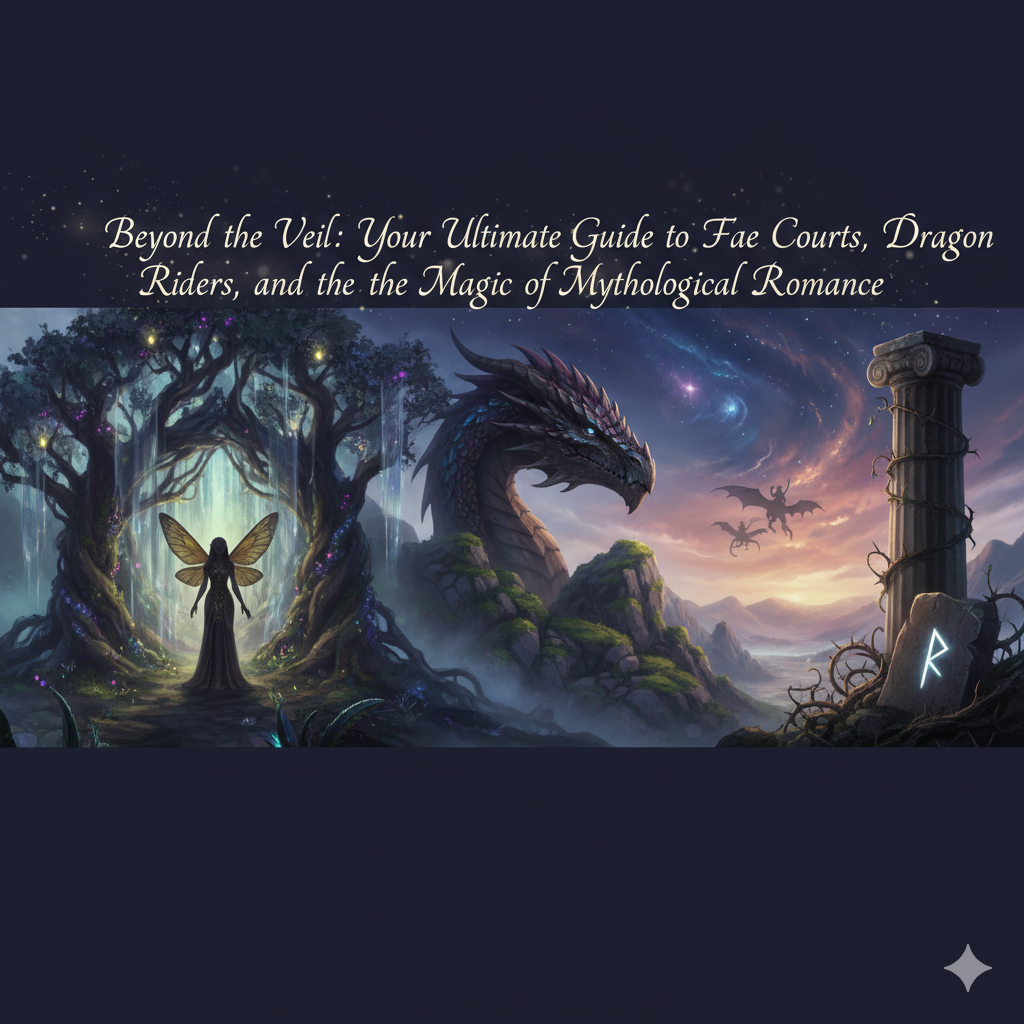
Beyond the Veil: Your Ultimate Guide to Fae Courts, Dragon Riders, and the Magic of Mythological Romance
Welcome to a world where ancient magic pulses through every word, where mythological creatures walk among mortals, and where love stories unfold against backdrops of courtly intrigue, aerial battles, and timeless folklore. If you’ve ever wondered what lies beyond the veil separating our world from realms of fae courts and dragon riders, or if you’re curious about the explosive popularity of mythological romance, you’ve come to the right place.
Mythological romance represents one of the fastest-growing subgenres in fantasy literature, captivating millions of readers with its intoxicating blend of ancient lore, epic world-building, complex magic systems, and deeply emotional love stories. From the treacherous beauty of fae courts to the fire-breathing majesty of dragon bonds, from Greek gods walking modern streets to Norse mythology reborn, this genre offers endless possibilities for adventure, passion, and transformation.
This comprehensive guide will take you on a journey through the essential elements of mythological romance, breaking down what makes each subgenre unique, exploring common tropes that readers can’t get enough of, and recommending books that exemplify the best of what this magical genre has to offer.
Understanding Mythological Romance: Where Fantasy Meets Heart
Before diving into specific elements, it’s essential to understand what defines mythological romance and why it resonates so powerfully with contemporary readers.
Mythological romance sits at the intersection of fantasy world-building and character-driven romance. Unlike pure fantasy that focuses primarily on plot and world-saving quests, or contemporary romance that grounds stories in realistic settings, mythological romance weaves these elements together. The magic systems, mythological frameworks, and fantastical settings aren’t mere backdrop—they’re integral to character development and relationship dynamics.
The romance itself typically follows certain conventions: central love stories that drive plot development, emotional intimacy that rivals or surpasses external conflicts, and satisfying romantic resolution (though not always traditional happily-ever-afters). What distinguishes mythological romance from other paranormal romance is its deep roots in actual mythology, folklore, and legendary creatures rather than modern supernatural inventions.
The appeal is multifaceted. These stories offer escapism into richly imagined worlds while exploring universal human experiences through the lens of the extraordinary. They tackle themes of power, identity, belonging, and transformation while delivering the emotional catharsis that comes from watching characters overcome seemingly impossible obstacles to find connection.
The Enchanting World of Fae Courts
Perhaps no element of mythological romance has captured reader imagination quite like fae courts. These stories draw from centuries of Celtic, European, and global folklore about fairy folk—beings of immense power, alien morality, and dangerous beauty.
The Appeal of Fae Romance
Fae courts offer everything readers crave in fantasy romance: intricate political machinations, immortal beings with complex histories, magic woven into every interaction, and the constant tension between different moral frameworks. The fae are traditionally portrayed as neither purely good nor evil but operating by their own inscrutable rules, creating delicious moral ambiguity.
The courtly settings provide natural stages for drama. Hierarchies of power, ancient feuds between courts (typically Seelie and Unseelie, or variations thereof), elaborate social rituals, and the ever-present danger of political maneuvering create high-stakes environments where romance must navigate treacherous waters.
Common Fae Romance Tropes
The mortal-caught-in-faerie trope remains eternally popular. Human protagonists stumbling into or being kidnapped into fae realms must navigate alien customs, survive deadly games, and often find themselves entangled with powerful fae beings. This fish-out-of-water scenario allows readers to discover the world alongside protagonists while exploring themes of transformation and belonging.
Bargains and magical contracts drive many fae romance plots. The folkloric tradition that fae cannot lie but can manipulate truth creates fascinating verbal sparring and high-stakes negotiations. Protagonists often find themselves bound by magical deals with unintended consequences, and romance frequently develops within or despite these binding agreements.
The enemies-to-lovers dynamic thrives in fae court settings. Ancient grudges, political opposition, or initial captivity can evolve into reluctant respect, undeniable attraction, and eventually consuming passion. The immortal lifespan of fae characters adds weight—these aren’t petty disagreements but centuries-old conflicts that love must overcome.
Essential Fae Court Reads
For readers new to fae romance, “A Court of Thorns and Roses” by Sarah J. Maas remains the quintessential modern entry point. This series popularized many contemporary fae romance conventions: a mortal woman drawn into fae politics, the transformation from human to something more, complex court intrigue, and a love triangle that evolves into chosen bonds. Maas blends Beauty and the Beast retellings with original world-building, creating an addictive series that has spawned countless imitators.
“The Cruel Prince” by Holly Black offers a darker, more politically intricate take on fae courts. Following a mortal girl raised in Faerie who refuses to be powerless among immortal beings, Black delivers cunning schemes, morally gray characters, and a slow-burn enemies-to-lovers romance that simmers with tension. This series appeals to readers who want their fae courts genuinely dangerous and their protagonists willing to play ruthless games.
“A Deal with the Elf King” by Elise Kova presents a fresh angle with Norse-influenced fae and a marriage-of-convenience setup. When a human woman is chosen as the Elf King’s bride to restore his dying realm, she must navigate court politics while uncovering the truth behind his curse. Kova delivers a tightly plotted standalone perfect for readers wanting complete stories without committing to lengthy series.
For those seeking spicier, adult-oriented fae romance, “A Court of Fae and Fire” series by Meg Anne and “From Blood and Ash” by Jennifer L. Armentrout deliver intensely passionate relationships alongside epic fantasy plots and intricate magical world-building.
Dragon Riders: Bonds Forged in Fire and Sky
Dragon riders represent another pillar of mythological romance, offering a unique blend of aerial combat, magical bonds, and the primal thrill of partnership with legendary creatures.
The Dragon Bond Dynamic
At the heart of dragon rider stories lies the bond—a magical, often telepathic connection between rider and dragon that transcends ordinary relationships. This bond serves multiple narrative functions: it provides internal character development opportunities, creates external stakes (threaten one and you threaten both), and often parallels or complicates romantic relationships.
The bond typically forms through selection, trial, or hatching rituals, establishing immediate trust and partnership that characters must then nurture. This mirrors romantic relationship development—initial connection followed by deepening understanding, navigating conflicts, and ultimate unity.
Dragons themselves vary widely in portrayal. Some authors present them as intelligent equals with distinct personalities and agency. Others depict them as powerful but more animalistic companions. The most compelling dragon rider romances typically treat dragons as fully realized characters whose relationships with riders add depth to the overall narrative.
Dragon Rider Romance Tropes
Training and academy settings provide popular frameworks for dragon rider romances. Military academies where young riders learn to bond with and fight alongside dragons offer natural romantic tension—rivalries, forced proximity, shared danger, and the camaraderie that develops through shared trials.
The enemies-to-lovers trope again proves irresistible in dragon rider contexts. Rival riders from opposing factions, competing for limited dragon bonds, or on opposite sides of conflicts must reconcile their growing attraction with their loyalties and duties.
Forbidden love scenarios arise naturally in hierarchical dragon rider societies. Riders of different ranks, from enemy nations, or whose dragons are ancestral rivals create built-in obstacles that heighten romantic tension.
The chosen one narrative frequently appears in dragon rider romance, with protagonists bonding to legendary or particularly powerful dragons, marking them as special and attracting both admiration and enmity—including from love interests.
Must-Read Dragon Rider Romances
“Fourth Wing” by Rebecca Yarros has become a phenomenon in dragon rider romance. Set in a war college where riders face deadly trials and political intrigue, Yarros delivers scorching chemistry between her warrior heroine and her brutal instructor, complex family dynamics, and genuinely dangerous stakes. The dragons themselves have distinct personalities, and the bonding process carries real weight. This series exemplifies why dragon rider romance has exploded in popularity—it combines found family, enemies-to-lovers tension, aerial combat, and devastating plot twists.
“Fireborne” by Rosaria Munda offers a more politically complex take on dragon riders. In a post-revolutionary society where dragonriders were once aristocrats, orphans from both sides now train together, creating simmering class tensions. The romance develops between former childhood friends now on opposite sides of ideology, providing emotional depth alongside dragon combat and political maneuvering.
“Eragon” by Christopher Paolini, while not primarily romance-focused, established many dragon rider conventions for contemporary audiences. The deep bond between Eragon and Saphira, the magical connection, and the extensive dragon lore influenced countless subsequent works in the subgenre.
For readers seeking steamier dragon rider romance with strong romantic focus, “Dragon Bound” by Thea Harrison and “The Last Hour of Gann” by R. Lee Smith (though darker and more science-fantasy) deliver intensely passionate relationships where the dragon or dragon-like characteristics of love interests become integral to romantic dynamics.
Mythological Romance Beyond Fae and Dragons
While fae courts and dragon riders dominate current mythological romance trends, the genre encompasses much broader territory.
Greek and Roman Mythology
Modern retellings of classical mythology offer fertile ground for romance. “A Touch of Darkness” by Scarlett St. Clair reimagines Hades and Persephone in a contemporary setting where gods still walk among mortals. These retellings often explore power dynamics, consent, and agency in ways that subvert or examine the original myths through modern perspectives.
“Ariadne” by Jennifer Saint and “Circe” by Madeline Miller provide more literary takes on mythological romance, centering women from Greek mythology and exploring their stories with nuance, beautiful prose, and emotional depth that transcends simple romance categorization.
Norse Mythology
Norse-inspired romances draw from the rich tradition of gods, valkyries, and epic sagas. “The Witch’s Heart” by Genevieve Gornichec tells the story of the witch Angrboda and her relationship with Loki, weaving romance into the larger tapestry of Norse cosmology and fate.
Celtic and Arthurian Legend
Arthurian retellings remain perennially popular. “The Mists of Avalon” by Marion Zimmer Bradley pioneered feminist retellings of Arthurian legend, while more recent works like “Half Sick of Shadows” by Laura Sebastian continue reimagining these tales with romantic elements foregrounded.
Folklore and Fairy Tales
Beyond specific mythologies, general folklore provides endless inspiration. Selkies, kelpies, banshees, and other creatures from global folklore appear in romance contexts, often exploring themes of cultural identity, transformation, and belonging.
Essential Tropes That Define the Genre
Certain narrative patterns recur across mythological romance subgenres, beloved by readers for good reason.
Enemies to Lovers
Perhaps the most popular romance trope of all, enemies-to-lovers thrives in mythological settings where ancient feuds, political opposition, or survival circumstances create genuine antagonism that must be overcome. The journey from hatred or distrust to reluctant respect to undeniable attraction provides unmatched emotional satisfaction.
Fated Mates and Destined Bonds
The concept that souls or fates intertwine appears frequently, whether through magical bonds, prophecies, or supernatural recognition. While this trope can remove agency if handled poorly, skilled authors use it to heighten stakes and explore how characters choose each other even when destiny has already decided.
Found Family
Mythological romance often features protagonists separated from biological families or discovering non-traditional family structures. Bands of riders, court companions, or fellow outcasts become chosen family, providing emotional support and raising stakes when romance complicates group dynamics.
Power Dynamics and Growth
Many mythological romances explore power—political, magical, and interpersonal. Characters often begin unequal and must navigate attraction complicated by power imbalances, eventually finding equilibrium through mutual growth and respect.
Sacrifice and Transformation
Transformation—literal or metaphorical—drives many mythological romance arcs. Characters may transform species, gain magical abilities, or undergo profound identity shifts. Romance becomes the catalyst or reward for these transformations, exploring themes of acceptance and authentic selfhood.
Finding Your Perfect Mythological Romance
With such variety within the genre, how do you find books that match your preferences?
Consider Your Heat Level Preference
Mythological romance spans from sweet, fade-to-black romances to extremely explicit content. Series like Sarah J. Maas’s later books include graphic intimate scenes, while others like Shannon Hale’s fae-inspired works remain appropriate for younger audiences. Check reviews and content warnings to find your comfort level.
Evaluate Your Tolerance for Dark Themes
Some mythological romances explore trauma, violence, toxic relationships (sometimes romanticized), and morally gray characters. Others offer lighter, more escapist fare. Understanding your boundaries helps avoid uncomfortable reading experiences.
Decide Between Standalone and Series
Mythological romance tends toward series given the extensive world-building required. However, many authors now write standalones or duologies for readers seeking complete stories without multi-year commitments.
Explore Author Communities
Authors in this genre often have active social media presences and engaged fan communities. Following authors on platforms like Instagram, TikTok, or Twitter can help you discover new releases and understand content before committing.
The Future of Mythological Romance
The genre continues evolving, with several exciting trends emerging.
Diverse Mythological Traditions are finally receiving attention. West African, Asian, Indigenous, and other mythological frameworks are being explored by authors from those cultures, enriching the genre beyond its Eurocentric roots.
Subversive Retellings that interrogate problematic elements of traditional myths while preserving their magic are gaining prominence, offering thoughtful engagement with source material.
Cross-Genre Blending produces urban fantasy romance set in contemporary cities, science fantasy combining space opera with mythological elements, and horror-romance hybrid that make mythological creatures genuinely threatening.
Conclusion: Stepping Through the Veil
Mythological romance offers something increasingly rare in modern life: genuine magic. These stories remind us that love can transcend impossible differences, that ancient forces still pulse through the world, and that we all possess the potential for transformation.
Whether you’re drawn to the deadly beauty of fae courts, the soaring freedom of dragon riders, the timeless power of classical mythology, or any other corner of this vast genre, there’s a magical world waiting beyond the veil. All you need to do is turn the first page and let yourself fall into the enchantment. The fae courts are holding court, the dragons are waiting to bond, and your next great love story might just involve ancient magic and impossible passion.