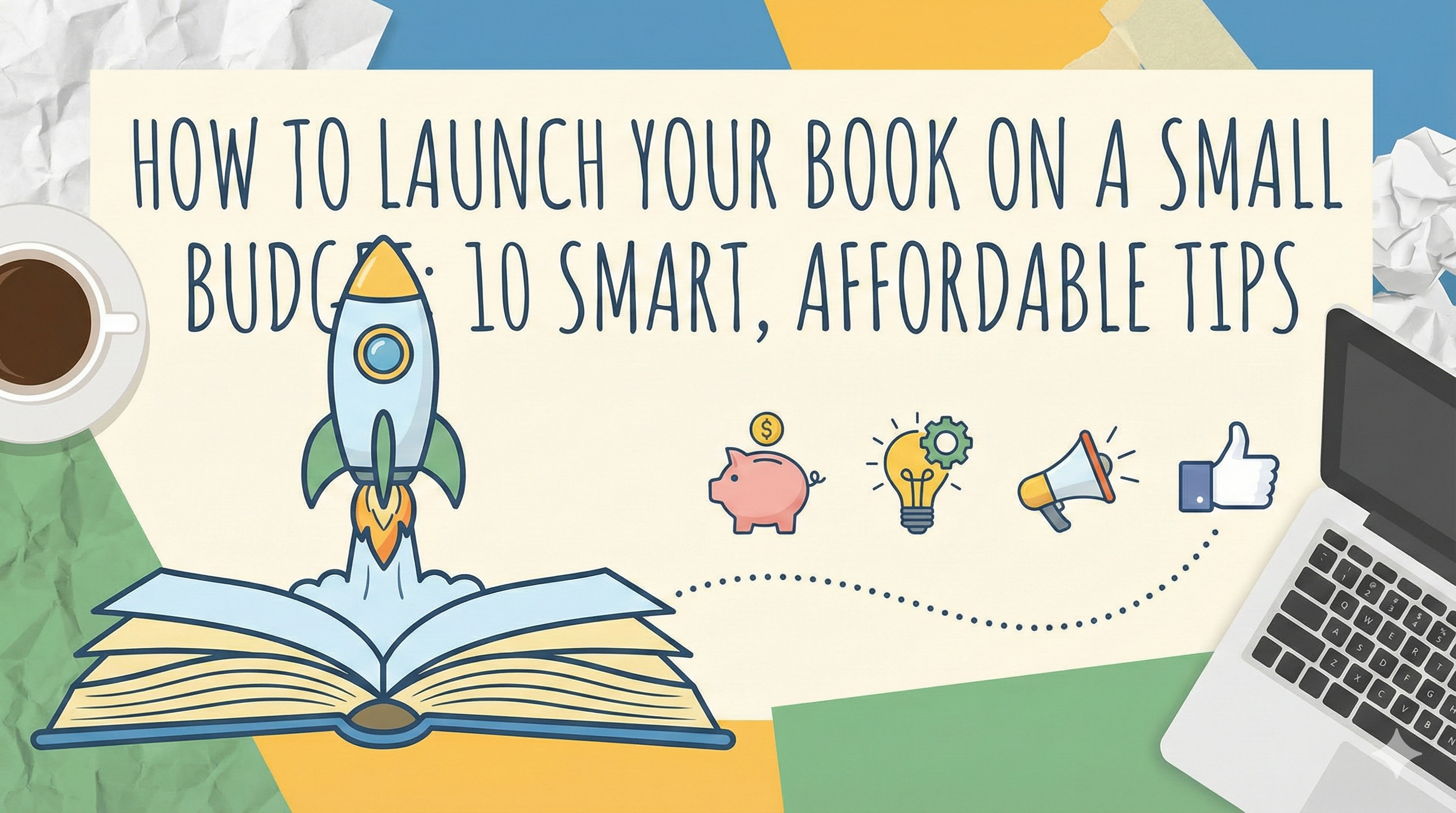
How to Launch Your Book on a Small Budget: 10 Smart, Affordable Tips
Publishing a book represents a significant personal and creative achievement, but the financial reality of book marketing can feel overwhelming. Major publishers invest tens of thousands of dollars into launch campaigns for their lead titles, creating glossy advertising, extensive publicity tours, and coordinated media blitzes. For self-published authors, debut novelists, or anyone without deep pockets or publisher backing, these lavish launches can seem impossibly out of reach.
Here’s the empowering truth: you don’t need a massive budget to launch your book successfully. While money certainly helps, creativity, strategic thinking, and genuine reader engagement often matter more than advertising spend. Some of the most successful book launches in recent years have relied primarily on grassroots efforts, word-of-mouth momentum, and smart allocation of limited resources rather than big-budget campaigns.
This comprehensive guide provides ten proven, budget-friendly strategies for launching your book effectively without breaking the bank. Each tip balances cost-effectiveness with impact, helping you maximize every dollar while building genuine connections with readers who will become your most valuable advocates.
1. Build Your Email List Before Launch Day
If you invest in only one pre-launch activity, make it email list building. Unlike social media followers who see only a fraction of your posts due to algorithms, email subscribers give you direct access to their inboxes—and email marketing consistently delivers the highest ROI of any digital marketing channel.
Why Email Lists Matter
Your email list represents owned media—a direct connection to interested readers that no platform can take away or algorithmically suppress. These subscribers have explicitly indicated interest in your work by providing their email addresses, making them far warmer prospects than random social media followers.
On launch day, your email list becomes your instant sales force. A message to 500 engaged subscribers will generate more immediate sales than posting to 5,000 disengaged social media followers.
Building Your List on a Budget
Start building your list months before launch, ideally 6-12 months out. Create a simple landing page using free tools like Mailchimp (free up to 500 subscribers), MailerLite, or ConvertKit’s free tier. Offer something valuable in exchange for email signups—this could be a free short story, the first three chapters of your upcoming book, exclusive bonus content, or early access to cover reveals.
Promote your signup incentive everywhere: your social media bios, website, author profiles on Goodreads and Amazon, conversations in reading communities, and anywhere potential readers congregate. Every new subscriber represents a potential launch day sale and long-term fan.
Between signup and launch, nurture your list with valuable content. Share your writing journey, behind-the-scenes glimpses, character insights, or reading recommendations in your genre. Build genuine relationships rather than just collecting email addresses to spam on launch day.
Cost: $0-$10/month for email service provider
2. Create a Strategic Launch Team
Launch teams—dedicated groups of readers who receive advance copies in exchange for reviews and promotion—represent one of the highest-impact, lowest-cost marketing strategies available.
The Power of Coordinated Momentum
When 30-50 people read, review, and talk about your book simultaneously around launch, it creates the appearance and reality of momentum. Reviews appear in clusters, social media buzz generates, and algorithms notice the activity, potentially boosting your book’s visibility.
This coordinated enthusiasm also provides social proof that influences fence-sitters. Browsers who see multiple recent reviews and social media posts perceive your book as relevant and worthy of attention.
Building Your Launch Team
Recruit team members 6-8 weeks before launch. Draw from your email list, social media followers, Goodreads connections, book club contacts, and personal networks. Look for people who genuinely enjoy your genre and have demonstrated reading enthusiasm through their online presence.
Be selective—quality matters more than quantity. Thirty enthusiastic, reliable readers who actually read and review beat 100 sign-ups where half never engage.
Set clear expectations from the start: when they’ll receive the book, the requested review deadline (typically within 2 weeks of receiving the book, posted around launch day), and which platforms you hope they’ll review on (prioritize Amazon and Goodreads). Make it easy by providing direct review links.
Make participation feel special. Give your team a name, provide exclusive content, ask for their input on small decisions (like choosing between two cover options), and express genuine gratitude. These people are volunteering their time—treat them as valued partners.
Cost: $0 (assuming digital ARCs)
3. Leverage Free and Low-Cost Book Promotion Sites
Numerous websites connect readers with new books through newsletters, though the most famous (like BookBub Featured Deals) can be expensive and highly selective. However, many effective promotion sites cost little or nothing.
Affordable Promotion Options
Services like Bargain Booksy, Robin Reads, BooksGoSocial, and dozens of others offer promotion packages ranging from free to $20-50. While they don’t deliver BookBub-level results, they still expose your book to targeted readers actively seeking new titles in your genre.
Many of these services work best with promotional pricing (like a launch week discount), which creates urgency while the promotion drives traffic. A book priced at $0.99 or $2.99 during a coordinated promotion often generates significant downloads and potentially climbs category rankings, increasing organic visibility.
Timing Your Promotions Strategically
Don’t blow your entire promotional budget on launch day. Consider staggering promotions across the first month—launch week, week two, and week four—to maintain momentum rather than creating one spike followed by silence.
Research which services work best for your genre by checking author communities, Facebook groups, and forums where writers share results. Some services excel with romance, others with thrillers or science fiction.
Cost: $0-$100 depending on number and tier of services used
4. Master Social Media Content Without Paid Ads
Social media marketing doesn’t require ad spend to be effective. Organic social media—strategic content that resonates with your target audience—can generate significant awareness and engagement at zero cost beyond your time.
Platform Strategy on a Budget
Rather than spreading yourself thin across every platform, focus on 1-2 where your target readers actually spend time. Romance readers congregate heavily on Instagram and TikTok. Thriller readers engage on Facebook groups. Fantasy readers populate Twitter/X and Reddit. Research where your audience lives and concentrate efforts there.
Create valuable content that serves your audience rather than just promoting yourself. Share reading recommendations, genre discussions, writing tips, behind-the-scenes glimpses, or entertaining content related to your book’s themes. The 80/20 rule applies—80% valuable or entertaining content, 20% direct promotion.
BookTok and Bookstagram Potential
These visual platforms offer particular opportunities for organic reach. Authentic enthusiasm, creative presentation, and genuine reader connection matter more than production values. Many authors have achieved breakthrough success through scrappy, homemade videos that resonated emotionally with viewers.
Don’t try to force virality—focus on consistently posting content that genuinely connects with your niche audience. A video that reaches 500 right-fit readers is more valuable than one that reaches 50,000 random viewers.
Engage authentically with book community content. Comment thoughtfully on other readers’ and authors’ posts, participate in reading challenges, join genre-specific discussions. Community participation often generates more discovery than self-promotion.
Cost: $0 (just your time and creativity)
5. Optimize Your Book Listing for Organic Discovery
Your book’s listing on Amazon, Goodreads, and other retailers is free advertising space that influences every potential buyer who lands on your page. Optimizing these listings maximizes conversion from browsers to buyers.
Crafting Compelling Book Descriptions
Your book description serves as sales copy—it must hook readers quickly and convince them your book delivers what they’re seeking. Study successful books in your genre, noting how their descriptions are structured.
Most effective descriptions follow a proven formula: compelling hook (1-2 sentences that grab attention), conflict setup (what’s at stake), character introduction (who we’ll care about), and intrigue (questions that make readers want answers). Avoid plot summaries that read like book reports—focus on emotional hooks and tension.
Use formatting strategically. Break descriptions into short paragraphs for easy scanning. Use occasional bold text to highlight key phrases (sparingly—overuse reduces impact). Some authors include review pull quotes directly in descriptions to leverage social proof immediately.
Strategic Keyword and Category Selection
Amazon allows up to seven keywords and two categories (with potential for up to ten categories through targeted keywords). These selections determine where your book appears in browse categories and what searches surface it.
Research profitable, achievable categories rather than highly competitive ones. Being #1 in a smaller, targeted category generates more visibility than being #50,000 in a massive category. Tools like Publisher Rocket (one-time fee) help identify category opportunities, though manual research through Amazon’s category browsing works too.
Keywords should reflect actual search terms readers use, not just obvious descriptors. Research by exploring “customers who bought this also bought” for similar books, noting common phrases in their keywords and categories.
Professional Cover and Formatting
While this involves some investment, professional presentation is non-negotiable. Readers do judge books by covers, and amateur-looking covers signal amateur content, regardless of your writing quality.
If budget is extremely tight, services like 99designs or Fiverr offer affordable cover design options ($50-300). Premade cover sites like GoOnWrite or SelfPubBookCovers offer genre-appropriate designs for $50-100. For print books, ensure proper formatting—poorly formatted interiors damage reader experience and generate negative reviews.
Consider this essential infrastructure, not optional marketing. A professional cover isn’t just aesthetic—it’s functional marketing that determines whether browsers click to learn more or scroll past.
Cost: $0 for listing optimization; $50-300 for cover if needed
6. Tap Into Existing Reading Communities
Thousands of online communities gather readers passionate about discovering new books. Strategic, authentic participation in these communities can generate significant launch visibility at zero monetary cost.
Finding Your Communities
Goodreads groups covering your genre, Facebook reading groups, Reddit communities (r/books, r/fantasy, r/romancebooks, etc.), Discord servers, and genre-specific forums all represent concentrated audiences of active readers.
Before joining, observe community norms. Some groups welcome author participation; others restrict or ban it. Some have dedicated promotional threads; others prohibit self-promotion entirely. Violating community norms results in removal and damages your reputation.
Authentic Engagement vs. Self-Promotion
The most effective community participation involves becoming a genuine member first, self-promoter second. Spend weeks or months contributing valuable content—recommending other books, participating in discussions, offering thoughtful perspectives—before mentioning your own work.
When you do promote your book, do so in designated spaces and with appropriate context. Rather than “Buy my book!” try “I just launched a space opera that fans of Becky Chambers might enjoy—happy to answer questions about it!” Frame your book as potentially valuable to community members rather than demanding their attention.
Many communities host weekly promotional threads, debut author showcase days, or other designated promotion opportunities. Use these appropriately, and your promotional efforts will be welcomed rather than resented.
Cost: $0 (just time investment)
7. Pursue Strategic Media Opportunities
Traditional media coverage—podcasts, blogs, local newspapers, online magazines—remains valuable for book launches, and much of it costs nothing except the effort required to pitch effectively.
Podcast Pitching Strategy
Thousands of podcasts cover books, writing, and genre-specific topics. While major podcasts are difficult to book, hundreds of smaller shows actively seek interesting guests.
Research podcasts that align with your book’s themes, genres, or subject matter. A thriller author might pitch to true crime podcasts. A historical fiction author could target history podcasts. Look beyond just book podcasts to shows where your expertise or book’s subject matter provides value.
Craft personalized pitches explaining specifically why you’d be valuable to that show’s audience. Avoid generic mass emails—podcast hosts can tell and immediately delete them. Reference specific episodes you enjoyed and explain what unique perspective or stories you’d share.
Local Media Angles
Local newspapers, radio stations, and community blogs often cover local authors as human interest stories. The “hometown author launches debut novel” angle works, especially for community newspapers that need local content.
Press releases help but aren’t mandatory—a simple email to the appropriate editor explaining you’re a local author launching a book and offering to discuss it often suffices. Highlight any local connections in your book (settings, themes) to strengthen the angle.
Online Media and Guest Blogging
Countless book blogs, online magazines, and genre-specific websites accept guest posts or interviews. These placements provide backlinks (helpful for website SEO), exposure to targeted audiences, and credibility signals.
Offer valuable content rather than just asking for coverage. Pitch guest posts on topics related to your book’s themes, “behind the book” features explaining your research or inspiration, or roundup contributions (like “5 books that influenced my writing”) that provide value to the site’s readers.
Cost: $0 (just research and pitching time)
8. Organize a Virtual Launch Event
Launch parties create event energy and give supporters a way to celebrate with you, but traditional in-person events are expensive and logistically challenging. Virtual launch events provide the celebration and community benefits at minimal cost.
Planning Your Virtual Launch
Host your event on free platforms like Zoom (free for meetings under 40 minutes), Facebook Live, Instagram Live, or YouTube Live. Schedule it for evening hours when most people are available, and promote it across all channels to your email list, social media, and through your launch team.
Structure the event to provide value and entertainment, not just you talking about your book. Consider elements like:
- Reading a compelling excerpt
- Q&A session about the book and your writing process
- Behind-the-scenes content about cover design, character development, or research
- Special guest appearances (critique partners, fellow authors, cover designer)
- Live giveaways or contests
- Breakout rooms for small group discussions (if using Zoom)
Make the book easily available to purchase during and after the event by sharing purchase links prominently and offering a limited-time launch discount for attendees.
Building Event Buzz
Promote your virtual launch as an event worth attending, not just another author talking about their book. Create graphics, post countdown reminders, and incentivize attendance with giveaways or exclusive content revealed only during the event.
Record the event and repurpose content afterward—clips for social media, the full recording for your website or YouTube channel, transcripts for blog content. One event generates weeks of content.
Cost: $0-$15 (Zoom pro if needed for longer events)
9. Implement a Pre-Order Strategy
Pre-orders provide multiple benefits: they generate early revenue, accumulate launch day sales momentum (all pre-orders count as day-one sales), signal market interest, and give you concrete numbers to motivate your launch team and supporters.
Making Pre-Orders Attractive
Incentivize pre-orders with exclusive bonuses unavailable to post-launch buyers: bonus chapters, character profiles, deleted scenes, exclusive short stories, early access to book two’s first chapter, or personalized acknowledgments in your next book.
Digital bonuses work well for ebooks—readers who pre-order receive an email with their bonus content. For print books, create a system where pre-order customers can submit proof of purchase to receive digital bonuses.
Pre-Order Promotion
Promote pre-orders through your email list, social media, and any early media coverage. Frame pre-ordering as supporting the book’s launch and ensuring readers receive the book immediately on release day.
Create urgency by making certain bonuses available only to pre-orders placed before specific dates—tiered bonuses that become less generous as launch approaches encourage early commitment.
Pre-Order Pricing Strategy
Some authors price pre-orders at a discount (like $0.99 for the first week, then increasing to full price), creating urgency and volume. Others maintain consistent pricing but enhance incentives through bonuses. Test what resonates with your audience.
Cost: $0 (pre-order setup is free on all major platforms)
10. Create Launch Week Momentum Through Coordinated Activity
Launch week isn’t just release day—it’s a strategic campaign spanning 5-7 days where you coordinate multiple activities to maintain visibility and energy.
Structuring Your Launch Week
Plan specific activities for each day rather than front-loading everything on day one:
Day 1 (Launch Day): Email your list with the announcement and purchase links. Post across all social media. Host your virtual launch event. Activate your launch team’s reviews and social posts.
Day 2-3: Share early review highlights and reader reactions. Post behind-the-scenes content about writing the book. Engage heavily with anyone posting about your book.
Day 4-5: Run promotional pricing or limited-time bonuses. Schedule any podcast appearances or interviews. Share “what readers are saying” compilations.
Day 6-7: Thank everyone who supported the launch. Share your week-one results (if strong). Tease what’s next to maintain engagement.
Maximizing Impact on a Budget
Coordinate your launch team, any promotional site features, media appearances, and social media pushes to cluster during launch week. This concentration of activity creates genuine momentum and the perception of buzz.
Track everything—sales, page reads, reviews posted, social media engagement, email open rates. This data helps you understand what worked and refine future book launches.
Cost: $0 (just coordination and execution effort)
Conclusion: Strategic Creativity Beats Big Budgets
Launching a book on a small budget requires more creativity, strategic thinking, and hustle than launching with unlimited resources, but it’s entirely possible to achieve meaningful success. Many bestselling authors began with shoe-string launches, building audiences gradually through genuine reader relationships rather than purchased visibility.
The most important insight is that sustainable book careers are built on reader relationships, not advertising spend. The readers you connect with authentically during a modest launch become advocates who buy every subsequent book and recommend you to friends. That foundation proves more valuable long-term than any amount of paid advertising.
Start implementing these strategies months before launch. Build your email list, recruit your launch team, join reading communities, and plan your content calendar. On launch day, you’ll have an army of supporters and a strategic plan that maximizes impact regardless of budget constraints.
Your book deserves readers who will love it. These ten strategies help you connect your book with those readers efficiently and affordably, proving that creativity, authenticity, and strategic thinking matter far more than the size of your marketing budget. Now go launch your book with confidence, knowing that small budgets can achieve big results when paired with smart strategies and genuine reader engagement.