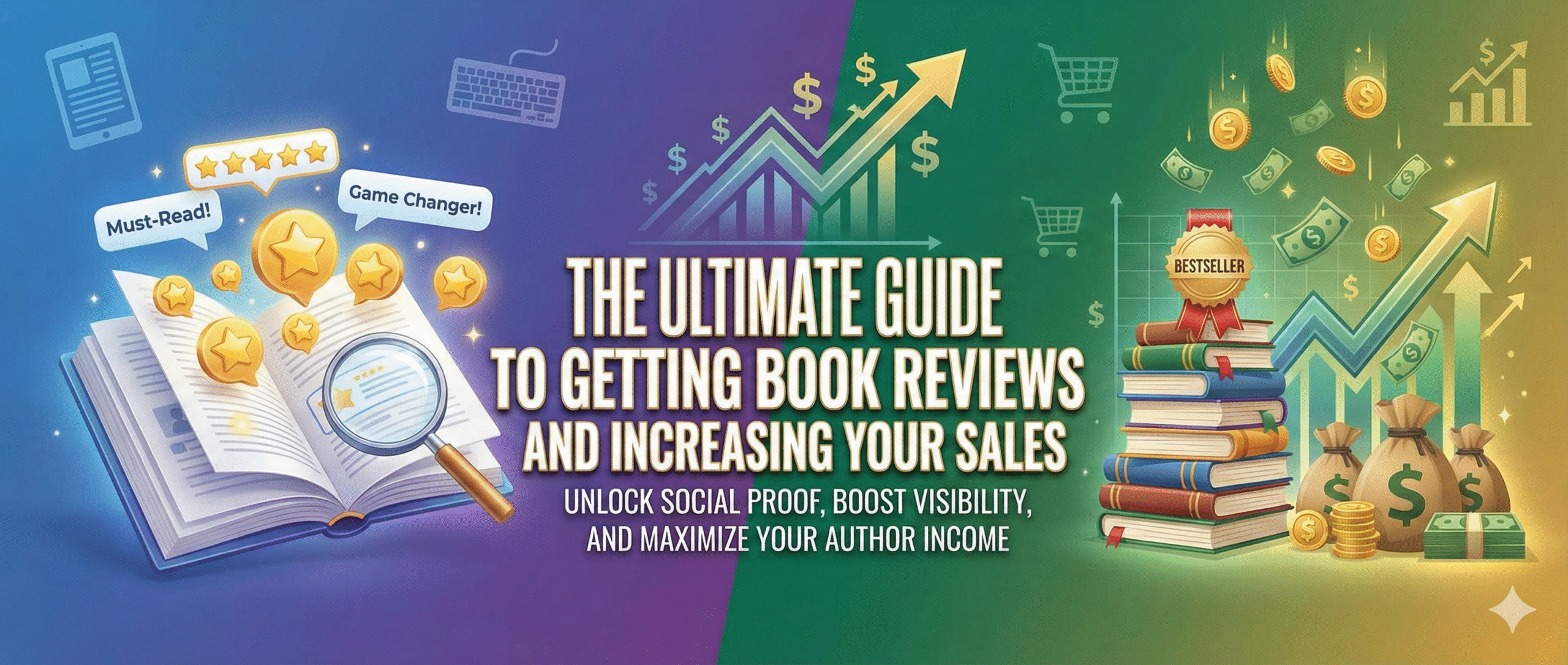
The Ultimate Guide to Getting Book Reviews and Increasing Your Sales
In the vast ocean of published books, where millions of titles compete for reader attention, reviews have become the lifeblood of book marketing. They’re not merely nice-to-have endorsements—they’re essential currency in the modern publishing economy, directly influencing discoverability, credibility, and ultimately, sales. Yet for many authors, especially those just starting their journey, accumulating reviews feels like an insurmountable challenge. How do you convince readers to not only buy your book but also take the additional step of leaving a review?
This comprehensive guide breaks down the art and science of generating book reviews, exploring proven strategies that work for authors at every stage of their careers, from debut novelists to established voices. More importantly, it illuminates how reviews translate into increased sales and provides actionable tactics for leveraging reviews to build sustainable momentum for your book.
Why Reviews Matter More Than Ever
Before diving into acquisition strategies, understanding the multifaceted value of reviews helps prioritize this often-underestimated aspect of book marketing.
Reviews drive algorithmic visibility. Amazon, the dominant force in book sales, uses reviews as a key ranking factor. Books with more reviews appear higher in search results, receive more prominent placement in recommendation algorithms, and qualify for merchandising opportunities like “Customers who bought this also bought” features. The platform’s algorithm doesn’t just count reviews—it weighs velocity (how quickly reviews accumulate), recency (fresh reviews signal ongoing relevance), and ratings in complex formulas that determine which books get amplified to potential buyers.
Goodreads, the world’s largest community of readers, similarly uses review counts and ratings to surface books in discovery features. Books with substantial review counts on Goodreads gain credibility and appear in more recommendation lists, reading challenges, and category rankings.
Social proof overcomes purchase hesitation. Consumer psychology research consistently demonstrates that people look to others’ experiences when making decisions under uncertainty. For books, where you can’t physically inspect the product before purchasing and where tastes vary wildly, reviews provide the social proof necessary to convert browsers into buyers.
A book with zero reviews triggers skepticism. Is it new? Unread because it’s poor quality? Too risky to try? The same book with 50 positive reviews signals safety, quality, and that others found value worth sharing. This psychological threshold effect means early reviews disproportionately impact sales—the difference between five and ten reviews matters more than the difference between 100 and 105.
Reviews provide marketing ammunition. Glowing testimonials become promotional content you can use across all marketing channels. Pull quotes for your website, social media graphics, email newsletter content, and even back cover copy for subsequent editions—reviews are gifts that keep giving long after they’re initially posted.
Specific praise also helps you understand what resonates with readers, allowing you to refine your marketing message. When multiple reviewers mention your “unforgettable characters” or “page-turning suspense,” you’ve identified your book’s strongest selling points to emphasize in future promotions.
Reviews qualify you for promotional opportunities. Many book promotion services, from BookBub to genre-specific newsletters, require minimum review counts before accepting submissions. These thresholds typically range from 10 to 50 reviews depending on the service’s prestige. Without meeting these minimums, entire promotional avenues remain closed, limiting your ability to reach new readers.
Similarly, award submissions, literary prize applications, and even some media opportunities consider review counts and ratings when evaluating books. A strong review profile opens doors that remain closed to books without reader validation.
Building Your Review Foundation: Pre-Launch Strategies
The most effective review acquisition begins before your book officially launches, establishing momentum that carries into release and beyond.
Advance Review Copies (ARCs) remain the gold standard. ARCs—advance copies provided to readers before publication—serve multiple purposes: they generate early reviews that appear on launch day, create buzz among influential readers, and identify potential advocates who might organically promote your book.
For traditionally published authors, publishers typically handle ARC distribution, though supplementing with your own efforts often proves beneficial. Self-published and indie authors must create their own ARC strategy, but fortunately, digital distribution makes this more accessible than ever.
Platforms like BookSirens, NetGalley, and BookSprout connect authors with review readers specifically interested in receiving advance copies in exchange for honest reviews. These services charge fees (typically modest for self-serve plans) but provide access to thousands of potential reviewers actively seeking new books in various genres.
When distributing ARCs, set clear expectations. Make it explicit that you’re providing the book in exchange for an honest review—not a positive review. This authenticity matters both legally (incentivized reviews violate most retailers’ terms of service if not properly disclosed) and practically (genuine feedback helps readers trust reviews).
Build a launch team of enthusiastic early readers. Beyond general ARC readers, cultivate a dedicated launch team—a group of 15-50 readers who commit to reading, reviewing, and promoting your book around launch. These aren’t random readers but people already invested in your success: newsletter subscribers, social media followers, friends, family, beta readers, or members of communities you participate in.
Launch teams work because they create coordinated momentum. When 30 reviews appear within the first week of publication, it signals to algorithms and potential buyers that this book is worth attention. The collective enthusiasm generates social media buzz, with team members sharing reviews, posting about the book, and recommending it within their networks.
To build an effective launch team, recruit well in advance (at least 6-8 weeks before launch), clearly communicate expectations and timelines, make participation feel special through exclusive access or behind-the-scenes content, and express genuine gratitude for their support.
Leverage your existing platform and network. Every author has some network, even if modest—friends, family, colleagues, social media connections, or members of communities you participate in. While approaching personal connections for reviews can feel uncomfortable, authentic requests to people genuinely interested in your success often yield positive responses.
The key is being specific and making it easy. Rather than vague “please support my book” requests, provide clear instructions: where to purchase, when reviews help most (ideally clustered around launch), and how to leave reviews on specific platforms. Some people want to help but don’t know how, so removing friction increases follow-through.
Maximizing Review Generation Post-Launch
Once your book releases, review acquisition becomes an ongoing process requiring sustained effort and strategic thinking.
Implement the back matter call-to-action. The most overlooked review generation opportunity is right at the end of your book. Readers who finish your book have demonstrated engagement and investment—they’re your most likely reviewers. Yet many authors neglect to ask.
Include a brief note after your final chapter thanking readers and explicitly requesting reviews. Keep it short, genuine, and specific. Explain that reviews help other readers discover books they’ll love and provide direct links or instructions for leaving reviews on major platforms.
For ebooks, include hyperlinks that take readers directly to review pages. For print books, provide simple instructions and URLs they can type. Some authors include QR codes that smartphone users can scan to reach review pages instantly.
Follow up strategically with readers. If you have any direct connection with readers—through newsletter subscriptions, social media interactions, or direct communications—strategic follow-up can significantly boost review rates.
The timing matters enormously. Most readers need time to finish books, so follow-up immediately after purchase is premature. A general rule suggests waiting 2-3 weeks after readers receive ebooks or 3-4 weeks for print books, allowing reasonable reading time without letting your book fade from memory.
Your follow-up should feel like genuine engagement rather than pestering. Share that you hope they enjoyed the book, mention you’d be grateful if they could leave a review to help other readers, and provide direct links. A single, politely worded follow-up typically generates better results than multiple reminders that risk annoying readers.
Make reviewing easy and attractive. Friction is the enemy of reviews. Many readers who genuinely enjoyed your book intend to leave reviews but never follow through because the process feels effortful or they forget.
Combat this by reducing friction wherever possible. Provide direct review links in every communication. Consider creating a simple landing page on your author website with one-click access to review pages on all major platforms—Amazon, Goodreads, BookBub, Apple Books—that you can share universally.
Some authors incentivize reviews (carefully and ethically) by entering reviewers into giveaways for future books, merchandise, or author experiences. The critical legal and ethical requirement is that these incentives must not be contingent on positive reviews—you’re rewarding the act of leaving honest feedback, not attempting to buy favorable opinions.
Engage with book bloggers and bookstagrammers. The online book community includes thousands of dedicated readers who regularly review books on blogs, Instagram, YouTube (BookTube), and TikTok (BookTok). These influencers vary from readers with hundreds of followers to those with hundreds of thousands, but engagement potential exists at every level.
Research reviewers who cover your genre, examine their content to ensure alignment with your book’s themes and style, and reach out with personalized pitches. Generic mass emails rarely succeed; tailored outreach acknowledging their specific interests and explaining why your book might resonate with their audience generates better responses.
Offer digital review copies without obligation, making it clear they’re free to decline if the book doesn’t appeal. Many reviewers receive more pitches than they can possibly accommodate, so respectful, no-pressure approaches build better long-term relationships even if they pass on your current book.
Participate authentically in reader communities. Goodreads groups, Reddit’s book communities, Facebook reading groups, Discord servers focused on specific genres—countless online spaces gather passionate readers. Strategic, authentic participation in these communities can generate reviews while building genuine reader relationships.
The crucial word is “authentic.” Communities quickly identify and reject authors who show up only to self-promote. Instead, become genuine community members. Participate in discussions, recommend other books, engage with posts unrelated to your work, and establish yourself as a reader and community member who happens to also write.
Once you’ve built credibility, occasional mentions of your work (when relevant) or requests for reader volunteers feel appropriate rather than spammy. Many reading communities have specific spaces for author engagement or promotional opportunities—use these respectfully and according to community norms.
Leverage your existing reviews. Good reviews can generate more reviews through social proof and increased visibility. Feature compelling reviews prominently on your website, share them on social media (with reviewers’ permission), and include pull quotes in promotional materials.
When reviews appear, engage appropriately. Thank reviewers publicly (without being excessive), share their reviews to your audience, and build relationships with particularly enthusiastic readers who might become long-term advocates.
Converting Reviews Into Sales: The Strategic Connection
Accumulating reviews is valuable, but maximizing their sales impact requires strategic leverage.
Optimize your book listings with review insights. Read your reviews analytically, identifying themes and phrases readers consistently use. If multiple reviewers mention “couldn’t put it down” or “emotional roller coaster,” incorporate similar language into your book description. Reviews reveal how readers actually experience your book, often more accurately than authors can self-assess.
Use review praise to strengthen your product description. Leading with “Readers are calling [Book Title] ‘unputdownable'” immediately leverages social proof. Integrate review pull quotes throughout your description to reinforce key selling points.
Time promotions strategically with review milestones. As you approach significant review thresholds—25, 50, 100 reviews—prepare promotional campaigns to maximize the visibility boost these milestones provide. Your book with 48 reviews is positioned differently in algorithms than one with 52 reviews, so capitalize on crossing these thresholds with pricing promotions, advertising campaigns, or promotional service submissions.
Many promotional services become available or more effective at specific review counts. BookBub Featured Deals, for instance, become more likely to accept submissions from books with strong review profiles. Plan your promotional calendar around review acquisition, staging major pushes once you’ve built sufficient social proof.
Use reviews in advertising creative. Facebook ads, Amazon ads, and other paid marketing channels allow creative customization. Ads featuring compelling review quotes typically outperform generic promotional copy. Create ad variations testing different review pull quotes to identify which resonate most with potential buyers.
Screenshots of 5-star reviews with enthusiastic text perform particularly well on visual platforms like Instagram and Facebook. These authentic testimonials from real readers feel more trustworthy than author-created marketing copy.
Create reader testimonial campaigns. Compile your best reviews into shareable graphics, video testimonials (if readers permit), or curated collections on your website. Reader testimonial campaigns—”See what readers are saying about [Book Title]”—provide weeks of social media content while reinforcing social proof.
Some authors create reader appreciation posts featuring individual reviewers (with permission), thanking them publicly and sharing their review. This demonstrates you value your readers while showcasing positive feedback to potential buyers.
Addressing Review Challenges and Setbacks
Not every review will be positive, and review acquisition rarely proceeds smoothly. Navigating challenges professionally protects your reputation and long-term success.
Handling negative reviews with grace. Negative reviews sting, but they’re inevitable. Even beloved bestsellers accumulate critical reviews. The publishing industry standard is that books with exclusively five-star reviews often appear suspicious—some criticism actually enhances credibility.
The cardinal rule: never argue with reviewers. Defensive author responses to negative reviews damage your reputation far more than the original reviews ever could. Readers considering your book will see your defensive behavior and reconsider, while the reviewer’s audience may rally to their defense, amplifying the negative narrative.
Instead, maintain professional silence or, at most, thank all reviewers generally for taking time to engage with your work. Use constructive criticism to improve future books, but don’t engage in debate over subjective opinions.
Combating fake or malicious reviews. Occasionally, authors face fake reviews intended to damage their book’s reputation—perhaps from competitors, internet trolls, or disgruntled individuals. Most platforms have reporting mechanisms for reviews that violate guidelines.
Amazon, Goodreads, and other retailers prohibit reviews from competing authors, reviews containing personal attacks unrelated to the book, or reviews that reveal spoilers without warnings. If a review clearly violates platform policies, report it through proper channels. However, accept that subjective negative opinions, even harsh ones, don’t violate guidelines and won’t be removed.
Focus energy on generating more positive reviews rather than obsessing over negative ones. As your positive review count grows, individual negative reviews diminish in proportional impact.
Maintaining momentum over time. Initial review velocity often slows after launch excitement fades. Maintaining review generation requires ongoing effort through continued engagement with readers, periodic review campaigns, and consistent content creation that keeps your book visible.
Consider quarterly “review drives” where you actively promote review requests through newsletters, social media, and other channels. These periodic pushes supplement organic review accumulation, maintaining the fresh review velocity that algorithms reward.
Ethical Considerations and Best Practices
The pressure to accumulate reviews sometimes tempts authors toward unethical practices. Resist these temptations—the short-term gains aren’t worth the long-term risks.
Never buy fake reviews. Services offering to sell you reviews violate every major retailer’s terms of service. If discovered, your book could be removed from sale, your account suspended, and your author reputation permanently damaged. Retailers employ sophisticated detection algorithms that identify suspicious review patterns, making fake review schemes increasingly risky.
Disclose material connections properly. If someone received your book free in exchange for a review, most platforms and legal guidelines (like FTC regulations) require disclosure. Ensure your ARC readers and review team members understand this requirement. A simple statement like “I received this book free in exchange for an honest review” satisfies disclosure obligations.
Don’t incentivize positive reviews—incentivize honest reviews. You can offer giveaway entries or other rewards for leaving reviews, but make explicitly clear that negative reviews qualify equally for incentives. You’re rewarding engagement and honest feedback, not attempting to buy favorable opinions.
Conclusion: Building a Sustainable Review Strategy
Book reviews represent one of the most powerful tools in an author’s marketing arsenal, directly influencing discoverability, credibility, and sales. Yet they require strategic, sustained effort to accumulate—reviews rarely appear spontaneously in meaningful numbers.
The most successful authors treat review generation as an ongoing priority, integrating it into every stage of their publishing process from pre-launch ARC distribution through years of post-publication engagement. They make requesting reviews easy and natural, engage authentically with reader communities, and leverage positive reviews across all marketing channels.
Remember that review accumulation is a marathon, not a sprint. The difference between 10 and 50 reviews might take months of consistent effort, but those reviews compound in value, opening promotional opportunities, driving organic discovery, and creating social proof that converts browsers into buyers.
Start today with whatever resources you have available. Reach out to your existing network, distribute ARCs through review platforms, add review requests to your book’s back matter, and engage authentically with reading communities. Each review you earn brings you closer to the critical mass that triggers algorithmic visibility and sustainable sales momentum.
Your book deserves to be discovered by readers who will love it. Reviews are the bridge connecting your work to those readers. Build that bridge deliberately, ethically, and persistently, and watch as reviews transform from elusive endorsements into the foundation of your book’s success.