
12 Book Marketing Questions Publishers Should Be Asking in 2026
The publishing industry stands at an inflection point. Traditional marketing strategies that reliably moved books for decades are losing effectiveness, while new platforms, technologies, and reader behaviors emerge with dizzying speed. As we look toward 2026, publishers face a landscape transformed by artificial intelligence, shifting social media dynamics, evolving retail ecosystems, and reader expectations fundamentally different from those of even five years ago. The publishers who will thrive in this new environment aren’t necessarily those with the biggest budgets or the most prestigious backlists. Rather, success will belong to those asking the right questions—challenging assumptions, interrogating old models, and developing strategies aligned with how readers actually discover, evaluate, and purchase books in 2026. This article presents twelve critical questions every publisher should be wrestling with as they develop marketing strategies for the year ahead. These aren’t questions with easy answers, but rather provocations designed to spark strategic thinking, encourage experimentation, and help publishers navigate an industry in profound transition. 1. How Are We Adapting to the TikTok-to-Amazon Pipeline? The BookTok phenomenon has fundamentally altered book discovery, particularly for younger readers. In 2026, TikTok remains a primary discovery platform where viral moments can catapult unknown titles to bestseller status within days. Yet many publishers still treat TikTok as an afterthought or novelty rather than a core marketing channel. The Question’s Implications Publishers must ask whether they’re truly understanding and leveraging this pipeline. Are you identifying which titles have TikTok potential before publication? Are you creating advance reader programs specifically targeting BookTok creators? Have you developed relationships with influential BookTok voices, providing them early access and creative freedom? More fundamentally, are you producing content—both books and marketing materials—designed for TikTok’s format and culture? TikTok success often hinges on emotional resonance, aesthetic appeal, and authentic enthusiasm rather than traditional marketing polish. Publishers accustomed to controlled messaging must learn to embrace creator-driven narratives they don’t entirely control. The TikTok-to-Amazon pipeline also raises questions about timing and inventory management. Books can go viral months or years after publication, creating sudden demand spikes. Are your systems flexible enough to capitalize on unexpected viral moments with rapid reprints and coordinated promotional support? 2. What Role Does AI Play in Our Personalization Strategy? Artificial intelligence has moved from experimental technology to practical tool, and by 2026, AI-powered personalization is table stakes in most consumer industries. Yet book marketing often remains remarkably one-size-fits-all. The Personalization Opportunity Publishers should ask how they’re using AI to personalize reader experiences across the entire marketing funnel. Can you serve different book descriptions to different reader segments based on their preferences? Can you dynamically adjust email content based on individual reading history and engagement patterns? Can AI help you identify which readers are most likely to respond to which titles, optimizing your outreach? Beyond marketing, AI raises questions about discoverability. Are you working with retailers to ensure their AI recommendation engines understand your titles’ nuances? As AI assistants increasingly mediate book discovery—readers asking ChatGPT or similar tools for recommendations—how do you ensure your titles surface appropriately? The ethical dimensions matter too. How do you balance personalization with privacy concerns? Where does helpful customization cross into manipulative targeting? These questions have no universal answers, but publishers must develop principled positions as AI capabilities expand. 3. Are We Overinvesting in Ineffective Social Media Platforms? Social media dynamics shift constantly, and 2026’s platform landscape differs significantly from previous years. Yet publishers often maintain presence across numerous platforms out of habit or fear of missing out, spreading resources thin without strategic justification. Strategic Platform Selection Publishers must ruthlessly evaluate which platforms actually drive book sales versus which merely consume resources. Does your Facebook presence generate meaningful book discovery, or is it a legacy investment maintained because “we’ve always been on Facebook”? Are your Twitter/X efforts reaching readers or just industry insiders talking to each other? This question demands platform-specific ROI analysis. Measure not just engagement metrics (likes, shares, comments) but actual conversions—email signups, website visits, purchases. You may discover that a single platform where you invest 60% of your social media effort generates 90% of your results, while four other platforms combined barely move the needle. The question also asks whether you’re early or late to emerging platforms. By 2026, new social platforms will have emerged, some gaining traction with specific demographics. Are you experimenting with these platforms before they reach saturation, or are you perpetually playing catch-up? Consider whether your social media strategy prioritizes author platform building over publisher brand building. In 2026, readers care more about individual authors than about publishers, so resources might better support author social presence than corporate publisher accounts. 4. How Are We Measuring Marketing Effectiveness Beyond Bestseller Lists? Traditional publishing success metrics—bestseller list placements, first-week sales, advance orders—remain important but increasingly incomplete measures of marketing effectiveness. Expanding Success Metrics Publishers should ask what additional metrics capture marketing success in 2026’s environment. Are you tracking reader lifetime value—how a single acquisition through marketing efforts leads to multiple purchases over time? Are you measuring community building and reader engagement rather than just one-time transactions? Consider qualitative metrics alongside quantitative ones. Are you monitoring social listening to understand how readers discuss your books? Are you tracking review sentiment and themes rather than just star ratings and counts? Are you measuring earned media value and share of conversation within genre communities? For books with long-tail potential, short-term metrics prove particularly inadequate. A title that sells modestly at launch but steadily for years through word-of-mouth can outperform a flash-in-the-pan bestseller. Are your marketing success measurements sophisticated enough to recognize and reward these different success patterns? Marketing attribution also demands attention. When a reader buys a book, can you identify which marketing touchpoint(s) influenced that decision? Multi-touch attribution—understanding how email, social media, reviews, and other factors work together—provides far more actionable insights than last-click attribution alone. 5. What’s Our Strategy for Audio-First Content and Podcasting? Audiobooks continue growing rapidly, and podcasting has become a major media consumption category. Yet many publishers treat audio as an afterthought—a
Self-Publishing Costs in 2026: What Authors Really Need to Know
The dream of self-publishing has never been more accessible. Platforms like Amazon KDP, IngramSpark, and Draft2Digital allow anyone to publish a book with zero upfront fees, theoretically making authorship available to all. Yet the reality of successful self-publishing in 2026 is far more nuanced than the “publish for free” marketing suggests. While you can technically upload a Word document and call yourself published, creating a book that looks professional, reaches readers, and generates meaningful sales requires strategic planning and resource allocation. This comprehensive guide breaks down what self-published authors truly need to invest in during 2026, distinguishing between essential elements, valuable investments, and unnecessary expenditures that drain budgets without delivering results. Whether you’re preparing to launch your first book or refining your approach after previous releases, understanding these priorities helps you allocate resources wisely, avoid expensive mistakes, and build a sustainable author career. The Three-Tier Approach to Self-Publishing Investment Before examining specific elements, it’s helpful to understand that self-publishing preparation falls into three tiers based on resource availability and ambitions. Bare Minimum Tier: This approach covers only the absolute essentials—a professional cover and basic editing. Books launched at this level can succeed, particularly in forgiving genres or if the author has strong existing marketing skills, but they face significant headwinds in competitive markets. Professional Standard Tier: This represents what most successful self-published authors invest per book. It includes professional editing, cover design, formatting, and modest marketing effort. Books at this level compete effectively with traditionally published titles in terms of presentation quality. Premium Launch Tier: This approach adds extensive marketing—paid advertising campaigns, publicity services, advanced reader programs, and potentially audiobook production. Authors with proven track records or those launching ambitious projects often operate at this level. Understanding these tiers helps set realistic expectations. You don’t necessarily need premium-tier investment to succeed, but understanding what each tier typically delivers helps you make informed decisions about where to allocate limited resources. Essential Elements: The Non-Negotiables Certain elements are virtually mandatory for any book hoping to compete in today’s market. Skimping on these areas almost always proves penny-wise and pound-foolish. Professional Cover Design In 2026, your cover design remains the single most important factor in whether browsers become buyers. Readers judge books by covers instantly and mercilessly. An amateur cover signals amateur content, regardless of your writing quality. Budget Options: Premade cover sites like GoOnWrite, SelfPubBookCovers, or BookCoverZone offer genre-appropriate designs at accessible price points. These covers use stock images that may appear on other books but provide professional design. Custom covers from designers on platforms like Fiverr or 99Designs offer more originality while remaining budget-friendly. Mid-Range Options: Established cover designers with genre expertise understand specific genre conventions, create covers that signal appropriate reader expectations, and deliver files in all necessary formats. At this level, you’re getting covers comparable to traditionally published books. Premium Options: High-end designers who work with major publishers deliver covers that can elevate your book’s perceived quality significantly. For competitive genres or books with commercial aspirations, this investment often pays for itself in increased conversion rates. The Bottom Line: Never skip professional cover design. If budget forces choices, invest more in cover than in almost any other area. A great cover on a decent book outsells a decent cover on a great book every time. Professional Editing Editing represents your second non-negotiable element, though the specific type and extent of editing required varies based on your manuscript and skills. Developmental Editing: Developmental editors address big-picture issues—plot structure, character development, pacing, and thematic coherence. If your manuscript has structural problems or you’re a newer writer still developing craft, developmental editing provides invaluable improvement. Most self-published authors skip developmental editing, relying instead on beta readers and critique partners for feedback, then addressing structural issues themselves. If you have strong critique partners and good self-editing skills, you might reasonably defer professional developmental editing. Copy Editing: Copy editing addresses sentence-level issues—grammar, syntax, word choice, consistency, and clarity. This level of editing is essential for professional-quality books. Copy editors catch the errors that make readers post reviews complaining about typos and grammar problems. Proofreading: Proofreading is the final pass after formatting, catching any remaining typos, formatting errors, or inconsistencies. It’s less intensive than copy editing but still valuable, particularly for print books where errors are permanent. Some authors combine copy editing and proofreading by having their copy editor do a final proofread of formatted files. The Bottom Line: At minimum, invest in copy editing. Your book must be clean and professional. Developmental editing is valuable but can sometimes be substituted with strong critique partners and self-editing. Proofreading is highly recommended but can potentially be done by careful beta readers if resources are severely constrained. Professional Formatting Formatting ensures your book’s interior looks professional across all formats—ebook, print, and potentially audiobook. DIY Formatting: Authors with technical skills can format ebooks using free tools like Calibre, or invest in one-time purchase software like Vellum (Mac only) or Atticus. For print, tools like Reedsy Book Editor or Atticus provide professional results. This approach saves money but requires time investment to learn the tools and attention to detail to avoid formatting errors. Professional Formatting Services: Many designers offer complete formatting packages—ebook and print interior—depending on book length and complexity. This ensures professional results without requiring you to develop technical skills. For authors who find formatting tedious or confusing, this investment buys peace of mind and time to focus on writing. The Bottom Line: Formatting is one area where DIY can work if you’re technically inclined. However, poor formatting damages reader experience, particularly for print books. If you have any doubt about your abilities, hire a professional—it’s relatively accessible compared to other investments. Important But Flexible Elements Beyond essentials, several elements can significantly improve your book’s success but vary widely in necessity depending on your specific situation. ISBN Numbers ISBNs (International Standard Book Numbers) uniquely identify your book. In 2026, their necessity depends on your distribution strategy. Free Options: Amazon provides free ASINs (Amazon Standard Identification Numbers) for
How to Launch Your Book on a Small Budget: 10 Smart, Affordable Tips
Publishing a book represents a significant personal and creative achievement, but the financial reality of book marketing can feel overwhelming. Major publishers invest tens of thousands of dollars into launch campaigns for their lead titles, creating glossy advertising, extensive publicity tours, and coordinated media blitzes. For self-published authors, debut novelists, or anyone without deep pockets or publisher backing, these lavish launches can seem impossibly out of reach. Here’s the empowering truth: you don’t need a massive budget to launch your book successfully. While money certainly helps, creativity, strategic thinking, and genuine reader engagement often matter more than advertising spend. Some of the most successful book launches in recent years have relied primarily on grassroots efforts, word-of-mouth momentum, and smart allocation of limited resources rather than big-budget campaigns. This comprehensive guide provides ten proven, budget-friendly strategies for launching your book effectively without breaking the bank. Each tip balances cost-effectiveness with impact, helping you maximize every dollar while building genuine connections with readers who will become your most valuable advocates. 1. Build Your Email List Before Launch Day If you invest in only one pre-launch activity, make it email list building. Unlike social media followers who see only a fraction of your posts due to algorithms, email subscribers give you direct access to their inboxes—and email marketing consistently delivers the highest ROI of any digital marketing channel. Why Email Lists Matter Your email list represents owned media—a direct connection to interested readers that no platform can take away or algorithmically suppress. These subscribers have explicitly indicated interest in your work by providing their email addresses, making them far warmer prospects than random social media followers. On launch day, your email list becomes your instant sales force. A message to 500 engaged subscribers will generate more immediate sales than posting to 5,000 disengaged social media followers. Building Your List on a Budget Start building your list months before launch, ideally 6-12 months out. Create a simple landing page using free tools like Mailchimp (free up to 500 subscribers), MailerLite, or ConvertKit’s free tier. Offer something valuable in exchange for email signups—this could be a free short story, the first three chapters of your upcoming book, exclusive bonus content, or early access to cover reveals. Promote your signup incentive everywhere: your social media bios, website, author profiles on Goodreads and Amazon, conversations in reading communities, and anywhere potential readers congregate. Every new subscriber represents a potential launch day sale and long-term fan. Between signup and launch, nurture your list with valuable content. Share your writing journey, behind-the-scenes glimpses, character insights, or reading recommendations in your genre. Build genuine relationships rather than just collecting email addresses to spam on launch day. Cost: $0-$10/month for email service provider 2. Create a Strategic Launch Team Launch teams—dedicated groups of readers who receive advance copies in exchange for reviews and promotion—represent one of the highest-impact, lowest-cost marketing strategies available. The Power of Coordinated Momentum When 30-50 people read, review, and talk about your book simultaneously around launch, it creates the appearance and reality of momentum. Reviews appear in clusters, social media buzz generates, and algorithms notice the activity, potentially boosting your book’s visibility. This coordinated enthusiasm also provides social proof that influences fence-sitters. Browsers who see multiple recent reviews and social media posts perceive your book as relevant and worthy of attention. Building Your Launch Team Recruit team members 6-8 weeks before launch. Draw from your email list, social media followers, Goodreads connections, book club contacts, and personal networks. Look for people who genuinely enjoy your genre and have demonstrated reading enthusiasm through their online presence. Be selective—quality matters more than quantity. Thirty enthusiastic, reliable readers who actually read and review beat 100 sign-ups where half never engage. Set clear expectations from the start: when they’ll receive the book, the requested review deadline (typically within 2 weeks of receiving the book, posted around launch day), and which platforms you hope they’ll review on (prioritize Amazon and Goodreads). Make it easy by providing direct review links. Make participation feel special. Give your team a name, provide exclusive content, ask for their input on small decisions (like choosing between two cover options), and express genuine gratitude. These people are volunteering their time—treat them as valued partners. Cost: $0 (assuming digital ARCs) 3. Leverage Free and Low-Cost Book Promotion Sites Numerous websites connect readers with new books through newsletters, though the most famous (like BookBub Featured Deals) can be expensive and highly selective. However, many effective promotion sites cost little or nothing. Affordable Promotion Options Services like Bargain Booksy, Robin Reads, BooksGoSocial, and dozens of others offer promotion packages ranging from free to $20-50. While they don’t deliver BookBub-level results, they still expose your book to targeted readers actively seeking new titles in your genre. Many of these services work best with promotional pricing (like a launch week discount), which creates urgency while the promotion drives traffic. A book priced at $0.99 or $2.99 during a coordinated promotion often generates significant downloads and potentially climbs category rankings, increasing organic visibility. Timing Your Promotions Strategically Don’t blow your entire promotional budget on launch day. Consider staggering promotions across the first month—launch week, week two, and week four—to maintain momentum rather than creating one spike followed by silence. Research which services work best for your genre by checking author communities, Facebook groups, and forums where writers share results. Some services excel with romance, others with thrillers or science fiction. Cost: $0-$100 depending on number and tier of services used 4. Master Social Media Content Without Paid Ads Social media marketing doesn’t require ad spend to be effective. Organic social media—strategic content that resonates with your target audience—can generate significant awareness and engagement at zero cost beyond your time. Platform Strategy on a Budget Rather than spreading yourself thin across every platform, focus on 1-2 where your target readers actually spend time. Romance readers congregate heavily on Instagram and TikTok. Thriller readers engage on Facebook groups. Fantasy readers populate Twitter/X and Reddit. Research where your audience
The Ultimate Guide to Getting Book Reviews and Increasing Your Sales
In the vast ocean of published books, where millions of titles compete for reader attention, reviews have become the lifeblood of book marketing. They’re not merely nice-to-have endorsements—they’re essential currency in the modern publishing economy, directly influencing discoverability, credibility, and ultimately, sales. Yet for many authors, especially those just starting their journey, accumulating reviews feels like an insurmountable challenge. How do you convince readers to not only buy your book but also take the additional step of leaving a review? This comprehensive guide breaks down the art and science of generating book reviews, exploring proven strategies that work for authors at every stage of their careers, from debut novelists to established voices. More importantly, it illuminates how reviews translate into increased sales and provides actionable tactics for leveraging reviews to build sustainable momentum for your book. Why Reviews Matter More Than Ever Before diving into acquisition strategies, understanding the multifaceted value of reviews helps prioritize this often-underestimated aspect of book marketing. Reviews drive algorithmic visibility. Amazon, the dominant force in book sales, uses reviews as a key ranking factor. Books with more reviews appear higher in search results, receive more prominent placement in recommendation algorithms, and qualify for merchandising opportunities like “Customers who bought this also bought” features. The platform’s algorithm doesn’t just count reviews—it weighs velocity (how quickly reviews accumulate), recency (fresh reviews signal ongoing relevance), and ratings in complex formulas that determine which books get amplified to potential buyers. Goodreads, the world’s largest community of readers, similarly uses review counts and ratings to surface books in discovery features. Books with substantial review counts on Goodreads gain credibility and appear in more recommendation lists, reading challenges, and category rankings. Social proof overcomes purchase hesitation. Consumer psychology research consistently demonstrates that people look to others’ experiences when making decisions under uncertainty. For books, where you can’t physically inspect the product before purchasing and where tastes vary wildly, reviews provide the social proof necessary to convert browsers into buyers. A book with zero reviews triggers skepticism. Is it new? Unread because it’s poor quality? Too risky to try? The same book with 50 positive reviews signals safety, quality, and that others found value worth sharing. This psychological threshold effect means early reviews disproportionately impact sales—the difference between five and ten reviews matters more than the difference between 100 and 105. Reviews provide marketing ammunition. Glowing testimonials become promotional content you can use across all marketing channels. Pull quotes for your website, social media graphics, email newsletter content, and even back cover copy for subsequent editions—reviews are gifts that keep giving long after they’re initially posted. Specific praise also helps you understand what resonates with readers, allowing you to refine your marketing message. When multiple reviewers mention your “unforgettable characters” or “page-turning suspense,” you’ve identified your book’s strongest selling points to emphasize in future promotions. Reviews qualify you for promotional opportunities. Many book promotion services, from BookBub to genre-specific newsletters, require minimum review counts before accepting submissions. These thresholds typically range from 10 to 50 reviews depending on the service’s prestige. Without meeting these minimums, entire promotional avenues remain closed, limiting your ability to reach new readers. Similarly, award submissions, literary prize applications, and even some media opportunities consider review counts and ratings when evaluating books. A strong review profile opens doors that remain closed to books without reader validation. Building Your Review Foundation: Pre-Launch Strategies The most effective review acquisition begins before your book officially launches, establishing momentum that carries into release and beyond. Advance Review Copies (ARCs) remain the gold standard. ARCs—advance copies provided to readers before publication—serve multiple purposes: they generate early reviews that appear on launch day, create buzz among influential readers, and identify potential advocates who might organically promote your book. For traditionally published authors, publishers typically handle ARC distribution, though supplementing with your own efforts often proves beneficial. Self-published and indie authors must create their own ARC strategy, but fortunately, digital distribution makes this more accessible than ever. Platforms like BookSirens, NetGalley, and BookSprout connect authors with review readers specifically interested in receiving advance copies in exchange for honest reviews. These services charge fees (typically modest for self-serve plans) but provide access to thousands of potential reviewers actively seeking new books in various genres. When distributing ARCs, set clear expectations. Make it explicit that you’re providing the book in exchange for an honest review—not a positive review. This authenticity matters both legally (incentivized reviews violate most retailers’ terms of service if not properly disclosed) and practically (genuine feedback helps readers trust reviews). Build a launch team of enthusiastic early readers. Beyond general ARC readers, cultivate a dedicated launch team—a group of 15-50 readers who commit to reading, reviewing, and promoting your book around launch. These aren’t random readers but people already invested in your success: newsletter subscribers, social media followers, friends, family, beta readers, or members of communities you participate in. Launch teams work because they create coordinated momentum. When 30 reviews appear within the first week of publication, it signals to algorithms and potential buyers that this book is worth attention. The collective enthusiasm generates social media buzz, with team members sharing reviews, posting about the book, and recommending it within their networks. To build an effective launch team, recruit well in advance (at least 6-8 weeks before launch), clearly communicate expectations and timelines, make participation feel special through exclusive access or behind-the-scenes content, and express genuine gratitude for their support. Leverage your existing platform and network. Every author has some network, even if modest—friends, family, colleagues, social media connections, or members of communities you participate in. While approaching personal connections for reviews can feel uncomfortable, authentic requests to people genuinely interested in your success often yield positive responses. The key is being specific and making it easy. Rather than vague “please support my book” requests, provide clear instructions: where to purchase, when reviews help most (ideally clustered around launch), and how to leave reviews on specific platforms. Some people want to help but don’t know how, so removing friction increases
Beyond the Veil: Your Ultimate Guide to Fae Courts, Dragon Riders, and the Magic of Mythological Romance
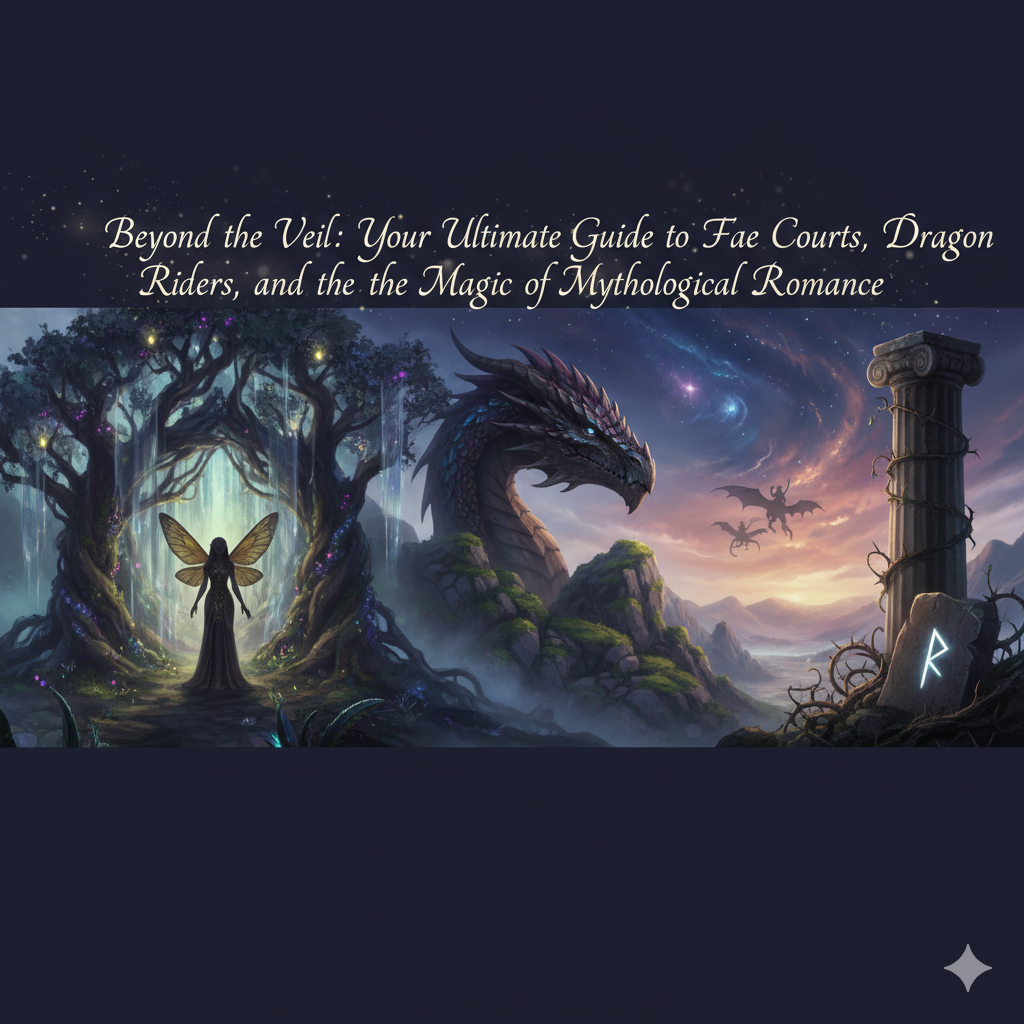
Welcome to a world where ancient magic pulses through every word, where mythological creatures walk among mortals, and where love stories unfold against backdrops of courtly intrigue, aerial battles, and timeless folklore. If you’ve ever wondered what lies beyond the veil separating our world from realms of fae courts and dragon riders, or if you’re curious about the explosive popularity of mythological romance, you’ve come to the right place. Mythological romance represents one of the fastest-growing subgenres in fantasy literature, captivating millions of readers with its intoxicating blend of ancient lore, epic world-building, complex magic systems, and deeply emotional love stories. From the treacherous beauty of fae courts to the fire-breathing majesty of dragon bonds, from Greek gods walking modern streets to Norse mythology reborn, this genre offers endless possibilities for adventure, passion, and transformation. This comprehensive guide will take you on a journey through the essential elements of mythological romance, breaking down what makes each subgenre unique, exploring common tropes that readers can’t get enough of, and recommending books that exemplify the best of what this magical genre has to offer. Understanding Mythological Romance: Where Fantasy Meets Heart Before diving into specific elements, it’s essential to understand what defines mythological romance and why it resonates so powerfully with contemporary readers. Mythological romance sits at the intersection of fantasy world-building and character-driven romance. Unlike pure fantasy that focuses primarily on plot and world-saving quests, or contemporary romance that grounds stories in realistic settings, mythological romance weaves these elements together. The magic systems, mythological frameworks, and fantastical settings aren’t mere backdrop—they’re integral to character development and relationship dynamics. The romance itself typically follows certain conventions: central love stories that drive plot development, emotional intimacy that rivals or surpasses external conflicts, and satisfying romantic resolution (though not always traditional happily-ever-afters). What distinguishes mythological romance from other paranormal romance is its deep roots in actual mythology, folklore, and legendary creatures rather than modern supernatural inventions. The appeal is multifaceted. These stories offer escapism into richly imagined worlds while exploring universal human experiences through the lens of the extraordinary. They tackle themes of power, identity, belonging, and transformation while delivering the emotional catharsis that comes from watching characters overcome seemingly impossible obstacles to find connection. The Enchanting World of Fae Courts Perhaps no element of mythological romance has captured reader imagination quite like fae courts. These stories draw from centuries of Celtic, European, and global folklore about fairy folk—beings of immense power, alien morality, and dangerous beauty. The Appeal of Fae Romance Fae courts offer everything readers crave in fantasy romance: intricate political machinations, immortal beings with complex histories, magic woven into every interaction, and the constant tension between different moral frameworks. The fae are traditionally portrayed as neither purely good nor evil but operating by their own inscrutable rules, creating delicious moral ambiguity. The courtly settings provide natural stages for drama. Hierarchies of power, ancient feuds between courts (typically Seelie and Unseelie, or variations thereof), elaborate social rituals, and the ever-present danger of political maneuvering create high-stakes environments where romance must navigate treacherous waters. Common Fae Romance Tropes The mortal-caught-in-faerie trope remains eternally popular. Human protagonists stumbling into or being kidnapped into fae realms must navigate alien customs, survive deadly games, and often find themselves entangled with powerful fae beings. This fish-out-of-water scenario allows readers to discover the world alongside protagonists while exploring themes of transformation and belonging. Bargains and magical contracts drive many fae romance plots. The folkloric tradition that fae cannot lie but can manipulate truth creates fascinating verbal sparring and high-stakes negotiations. Protagonists often find themselves bound by magical deals with unintended consequences, and romance frequently develops within or despite these binding agreements. The enemies-to-lovers dynamic thrives in fae court settings. Ancient grudges, political opposition, or initial captivity can evolve into reluctant respect, undeniable attraction, and eventually consuming passion. The immortal lifespan of fae characters adds weight—these aren’t petty disagreements but centuries-old conflicts that love must overcome. Essential Fae Court Reads For readers new to fae romance, “A Court of Thorns and Roses” by Sarah J. Maas remains the quintessential modern entry point. This series popularized many contemporary fae romance conventions: a mortal woman drawn into fae politics, the transformation from human to something more, complex court intrigue, and a love triangle that evolves into chosen bonds. Maas blends Beauty and the Beast retellings with original world-building, creating an addictive series that has spawned countless imitators. “The Cruel Prince” by Holly Black offers a darker, more politically intricate take on fae courts. Following a mortal girl raised in Faerie who refuses to be powerless among immortal beings, Black delivers cunning schemes, morally gray characters, and a slow-burn enemies-to-lovers romance that simmers with tension. This series appeals to readers who want their fae courts genuinely dangerous and their protagonists willing to play ruthless games. “A Deal with the Elf King” by Elise Kova presents a fresh angle with Norse-influenced fae and a marriage-of-convenience setup. When a human woman is chosen as the Elf King’s bride to restore his dying realm, she must navigate court politics while uncovering the truth behind his curse. Kova delivers a tightly plotted standalone perfect for readers wanting complete stories without committing to lengthy series. For those seeking spicier, adult-oriented fae romance, “A Court of Fae and Fire” series by Meg Anne and “From Blood and Ash” by Jennifer L. Armentrout deliver intensely passionate relationships alongside epic fantasy plots and intricate magical world-building. Dragon Riders: Bonds Forged in Fire and Sky Dragon riders represent another pillar of mythological romance, offering a unique blend of aerial combat, magical bonds, and the primal thrill of partnership with legendary creatures. The Dragon Bond Dynamic At the heart of dragon rider stories lies the bond—a magical, often telepathic connection between rider and dragon that transcends ordinary relationships. This bond serves multiple narrative functions: it provides internal character development opportunities, creates external stakes (threaten one and you threaten both), and often parallels or complicates romantic relationships. The bond typically forms through selection, trial, or hatching rituals, establishing immediate trust and partnership that characters must
Inside the War on Book Piracy: 2025’s Most Effective Publisher Strategies

Book piracy has evolved from a niche problem into a multibillion-dollar threat that affects authors, publishers, and the broader literary ecosystem. As digital technology has made copying and distributing books effortlessly easy, the publishing industry faces an adversary that’s constantly adapting, using sophisticated methods to circumvent protections and monetize stolen content. Yet 2025 marks a turning point: publishers are finally deploying strategies that show real effectiveness in combating piracy—not through brute force alone, but through a sophisticated combination of technology, legal action, consumer psychology, and business model innovation. This deep dive examines the current state of book piracy, the most damaging tactics pirates employ, and the multifaceted strategies publishers are using to protect intellectual property while maintaining reader goodwill and market access. The Scope and Evolution of Book Piracy Understanding the problem requires examining how book piracy has transformed over the past decade. Digital piracy has industrialized. Gone are the days when book piracy meant individuals scanning books and sharing them on forums. Today’s piracy operations are sophisticated businesses generating substantial revenue through advertising, premium subscriptions, and data harvesting. Sites like Z-Library (despite repeated takedowns), Library Genesis, and countless others operate as polished platforms with search functions, recommendation algorithms, and user interfaces that rival legitimate retailers. These platforms host millions of titles—often uploading new releases within hours of publication, sometimes even before official release dates by compromising advance review copy distribution. The scale is staggering: conservative estimates suggest that pirated ebooks are downloaded billions of times annually, representing tens of billions of dollars in lost revenue. The economic impact extends beyond lost sales. While not every pirated download represents a lost purchase—some people who pirate wouldn’t have bought the book regardless—the aggregate effect is significant. Authors, especially mid-list and debut writers, see their royalty income diminished. Publishers face pressure on margins, potentially reducing advances and taking fewer risks on unproven voices. The entire ecosystem suffers when piracy diverts revenue that would otherwise fund new acquisitions, editorial development, and author support. Beyond direct revenue loss, piracy undermines marketing strategies. Publishers carefully time releases, manage pricing across windows, and coordinate promotional activities. Pirates disrupt these strategies by making content available immediately at all markets simultaneously, often before official street dates. Reader attitudes remain complex. While most readers understand piracy is theft, rationalization is common. Some argue that ebook prices are too high. Others live in regions where legitimate access is difficult or impossible. Students claim financial necessity. These rationalizations, whether valid or not, create a cultural environment where piracy feels less unambiguously wrong than stealing physical books would be. Surveys consistently show that many regular pirates would pay for content if pricing, availability, and user experience met their expectations. This suggests that effective anti-piracy strategy must address not just enforcement but also the underlying value propositions that drive people to pirate sources. The Most Damaging Piracy Methods Publishers face multiple vectors of attack, each requiring different defensive strategies. Ebook file sharing through dedicated piracy sites remains the most visible threat. Sites with millions of users and extensive libraries make virtually any commercially published book available for free download in multiple formats. These platforms often operate from jurisdictions with lax intellectual property enforcement, making legal action challenging. More sophisticated piracy operations use cloud storage services, disguising pirated content within seemingly legitimate file-sharing. They employ distributed networks, blockchain technology, and other methods that make takedown efforts complex and often futile—shut down one node and three more appear. Textbook piracy constitutes a particularly lucrative sector. Given textbook prices often exceeding $200, student demand for pirated academic texts is enormous. Entire platforms exist solely for textbook piracy, and course-related social media groups openly share links to pirated copies. The economic pressure students face makes this piracy category especially resistant to moral arguments. Audiobook piracy has accelerated alongside audiobook market growth. Pirated audiobook files, sometimes ripped directly from Audible or recorded from library borrowings, circulate widely. The file sizes are larger than text ebooks, but modern bandwidth makes this nearly irrelevant. Some pirates even maintain “audiobook libraries” with thousands of titles available for streaming or download. Advance Reader Copy (ARC) leaks represent a particularly damaging category. ARCs sent to reviewers, bloggers, and industry professionals sometimes end up on piracy sites weeks before official publication. These early leaks can devastate carefully planned launch strategies and eliminate any first-mover advantage for legitimate retailers. Subscription service exploitation involves users signing up for legitimate services like Kindle Unlimited or Scribd, systematically downloading or removing DRM from extensive catalogs, then canceling subscriptions. While individually small-scale, this practice in aggregate represents significant loss and abuse of services designed to benefit readers and authors. Technology-Based Defense Strategies Publishers are deploying increasingly sophisticated technological measures, moving beyond simple DRM to multi-layered approaches. Advanced Digital Rights Management (DRM) has evolved considerably from early, easily-cracked systems. Modern DRM implementations use dynamic encryption, hardware-binding, and cloud-based authentication that make unauthorized copying significantly more difficult. While no DRM is unbreakable, the goal is raising the barrier high enough that casual pirates give up, leaving only determined individuals who likely wouldn’t have purchased anyway. Critically, publishers are implementing smarter DRM that balances protection with user experience. Overly restrictive DRM that prevents legitimate uses (reading on multiple devices, text-to-speech functionality, accessibility features) creates customer frustration and can actually drive people toward piracy. The most effective 2025 implementations protect content while remaining nearly invisible to legitimate users. Digital watermarking and fingerprinting embed unique identifiers in each ebook copy sold. If that copy appears on piracy sites, publishers can trace it back to the original purchaser. This accountability creates deterrence—many potential leakers think twice knowing their purchase could be traced. Beyond individual watermarking, publishers use content fingerprinting technology that can identify pirated copies even after they’ve been reformatted, had metadata stripped, or been slightly modified. This enables automated detection across piracy platforms, facilitating faster takedown requests. Web crawlers and automated monitoring systems constantly scan the internet for pirated content. Advanced AI-powered systems recognize books even when titles are misspelled, covers are changed, or files are hosted under generic names. These systems generate automated
Short, Sharp, and Engaging: Why Compact Books Are Winning Hearts
In an era defined by information overload and fractured attention spans, a quiet revolution is transforming the publishing landscape. While epic fantasy series and sprawling literary novels still command shelf space and devotion, a growing movement celebrates brevity: compact books that deliver powerful experiences in concentrated doses. From novellas that clock in under 200 pages to business books that respect your time with 150 pages of insight instead of 400 pages of padding, shorter books are capturing readers’ hearts and wallets in unprecedented numbers. This isn’t about dumbing down literature or sacrificing depth for convenience. Rather, it represents a sophisticated evolution in how we create and consume written content—a recognition that concision can be its own form of artistry, that sometimes the most profound experiences come in compact packages, and that respecting readers’ time can actually deepen rather than diminish engagement. The Changing Landscape of Reader Attention To understand why compact books are resonating so powerfully, we must first examine the fundamental shifts in how modern readers engage with content. Time scarcity has become the defining constraint of modern life. The average adult juggles professional responsibilities, family obligations, social commitments, and an overwhelming array of entertainment options competing for leisure time. In this context, committing to a 600-page novel represents a substantial investment that many readers hesitate to make. A 150-page novella, conversely, feels manageable—something you might finish over a weekend or during a week of commuting, providing the satisfaction of completion that longer books often deny busy readers. This isn’t about shorter attention spans, as the tired cultural narrative suggests. Many readers who embrace compact books also devour lengthy works when they merit the investment. Rather, it’s about decision-making under uncertainty. A shorter book reduces risk. If it disappoints, you’ve invested hours rather than weeks. If it delights, you experience satisfaction more quickly and can move on to the next discovery. Digital distractions have fragmented reading experiences. We live surrounded by notifications, messages, emails, and infinite scroll. While readers have always faced distractions, the modern environment makes sustained focus more challenging than ever. Compact books accommodate this reality by offering experiences that can be completed in fewer sittings, reducing the need to maintain narrative threads across weeks of interrupted reading. Shorter books also align with how many people now read—in stolen moments between obligations, on phones during commutes, before bed when energy flags. A tightly constructed 200-page novel is more likely to be finished than abandoned, whereas doorstop tomes often languish half-read on nightstands, generating guilt rather than pleasure. The satisfaction of completion drives reader psychology. There’s profound psychological reward in finishing a book. That sense of accomplishment, of having experienced a complete narrative arc, provides genuine pleasure. In a world where many of our projects and efforts feel perpetually incomplete, finishing books offers tangible achievement. Compact books deliver this satisfaction more frequently. A reader who completes four 150-page novellas experiences four distinct completion moments versus the single experience of finishing one 600-page novel. This isn’t about preferring quantity over quality—it’s about the psychological rewards of beginnings and endings, which shorter books provide more frequently. The Artistic Case for Brevity Beyond pragmatic considerations, there are profound artistic arguments for concision that elevate compact books above mere convenience. Discipline and precision characterize great short fiction. Every word in a well-crafted compact book must earn its place. There’s no room for meandering subplots, excessive description, or self-indulgent prose. This constraint forces authors to distill their vision to its essence, often resulting in prose that carries greater weight and impact per page than longer works. Writers like Carmen Maria Machado, Ted Chiang, and Ocean Vuong have demonstrated how brevity can amplify rather than diminish literary power. Their compact works achieve emotional and intellectual depth through precision and economy, proving that page count correlates poorly with substance. The novella form in particular occupies a sweet spot—long enough for genuine character development and thematic complexity, short enough to maintain structural tightness and narrative urgency. Classic novellas like “The Metamorphosis,” “Of Mice and Men,” and “The Old Man and the Sea” remain more culturally enduring than many sprawling novels from their eras. Intensity increases when padding disappears. Consider the difference between a two-hour film and a limited series. While series allow for expansive storytelling, films often achieve greater emotional concentration precisely because they compress experience. Similarly, compact books can deliver more intense, focused experiences than longer works that necessarily include valleys between peaks. This intensity makes compact books ideal for certain stories. Horror and suspense particularly benefit from relentless pacing that shorter formats enable. Psychological character studies can achieve devastating impact when every scene contributes directly to the central examination. Experimental or formally innovative works often succeed better in compact forms where readers more readily accept structural unconventionality. Accessibility expands readership. Shorter books lower barriers to entry for several reader populations. People returning to reading after years away find compact books less intimidating. English language learners can more readily engage with shorter works. Readers with cognitive differences or disabilities that make sustained focus challenging benefit from manageable lengths. This accessibility democratizes literature, potentially expanding who participates in literary culture. A vibrant ecosystem of compact books invites broader participation than one dominated solely by lengthy tomes. Genre-Specific Renaissance The compact book renaissance manifests differently across genres, each discovering unique advantages in shorter formats. Literary Fiction Embraces the Novella: Literary presses increasingly champion novellas, recognizing them as artistically complete forms rather than truncated novels. Presses like Graywolf, New Directions, and Two Dollar Radio regularly publish celebrated novellas that receive critical acclaim and major awards. Authors find novellas allow them to take formal risks and explore narrow, intense slices of experience that wouldn’t sustain novel length. The novella also appeals to readers who want literary sophistication without the time commitment of 400-page novels. You can experience a complete, artistically ambitious work in a few hours, making literary fiction more accessible to busy readers who might otherwise default to more commercial, easier reads. Business and Non-Fiction Respect Reader Time: The business book industry has
How to Run a Successful Book Giveaway and Skyrocket Your Reviews
In the crowded landscape of modern publishing, getting your book noticed can feel like shouting into a void. With millions of titles competing for reader attention, authors need strategic marketing tactics that not only increase visibility but also generate the social proof that drives sales. Enter the book giveaway: a powerful promotional tool that, when executed correctly, can dramatically increase your review count, expand your readership, and create momentum that propels your book up the rankings. But not all book giveaways are created equal. A poorly planned giveaway can waste time and resources while yielding minimal results. A well-executed campaign, however, can transform your book’s trajectory, building a foundation of reviews and reader engagement that pays dividends long after the promotion ends. This comprehensive guide will walk you through every step of planning, launching, and maximizing a book giveaway that delivers real results. Understanding the Power of Book Reviews Before diving into giveaway mechanics, it’s crucial to understand why reviews matter so much in today’s publishing ecosystem. Reviews serve multiple critical functions that directly impact your book’s success. First, reviews provide social proof. Readers are naturally hesitant to take a chance on an unknown author or a book with no feedback. A healthy collection of reviews signals that real people have read and enjoyed your work, reducing the perceived risk of purchase. Studies consistently show that books with more reviews sell significantly better than those with few or none. Second, reviews improve discoverability. Most online retailers use algorithms that favor books with higher review counts and better ratings. Amazon, for instance, is more likely to recommend your book to potential readers once you cross certain review thresholds. Many promotional services and book deal newsletters also require minimum review counts before they’ll feature your title. Third, reviews provide valuable feedback. Honest reader responses help you understand what’s working in your writing and what might need improvement in future books. They also give you insight into your target audience and how your book is being perceived in the market. Setting Clear Goals for Your Giveaway Every successful book giveaway begins with clearly defined objectives. What exactly do you hope to achieve? While increasing reviews is the primary focus, consider your broader goals as well. Are you launching a new release and need that critical initial review momentum? Are you trying to revitalize interest in a backlist title? Do you want to grow your email list for future launches? Are you hoping to boost rankings in specific categories? Different goals may require different giveaway strategies. Set specific, measurable targets. Instead of vaguely hoping for “more reviews,” aim for something concrete: 50 new reviews within 30 days, or crossing the 100-review threshold on Amazon. Having a clear target helps you design your giveaway appropriately and measure its success. Choosing the Right Platform The platform you choose for your giveaway significantly impacts both your reach and results. Each option has distinct advantages and limitations. Amazon Giveaways were once a popular choice but have been discontinued. However, Amazon Vine remains available for authors enrolled in certain programs, connecting your book with trusted reviewers in exchange for honest feedback. Goodreads Giveaways offer access to a community of passionate readers who are specifically interested in discovering new books. Goodreads users who enter giveaways are often engaged readers who actually read and review the books they win. The platform allows you to set the number of copies you’ll give away and the contest duration, and it automatically handles winner selection. The downside is that entering a Goodreads giveaway adds your book to users’ “to-read” lists regardless of whether they win, which can inflate expectations without guaranteed results. BookFunnel and StoryOrigin are popular services designed specifically for author promotions. These platforms allow you to run giveaways, organize blog tours, and manage review copies efficiently. They’re particularly effective for building your email list since participants must provide their email address to receive the free book. Both platforms have established communities of readers actively looking for new books. Social Media Platforms offer wide reach but require more hands-on management. Running a giveaway on Instagram, Facebook, or Twitter allows you to leverage your existing audience and potentially reach new readers through shares and engagement. However, you’ll need to manually manage entries, select winners, and follow each platform’s promotion guidelines carefully to avoid having your account penalized. Your Author Website or Newsletter can be highly effective for building a dedicated reader base. Offering a free book in exchange for newsletter signups creates a warm audience you can market to repeatedly. This approach prioritizes quality over quantity, attracting readers genuinely interested in your work rather than serial giveaway entrants. Structuring Your Giveaway for Maximum Impact The structure of your giveaway dramatically affects both participation rates and the quality of reviews you receive. Several key elements require careful consideration. Physical Books vs. Digital Copies: Physical books feel more substantial and valuable to readers, potentially attracting higher-quality participants who are more likely to read and review. However, they’re expensive to give away, especially when factoring in shipping costs. Digital copies allow you to reach far more people at minimal cost, but they may attract participants who collect free ebooks without actually reading them. Consider offering both options or targeting specific audiences with each format. Entry Requirements: What must participants do to enter? Simply providing an email address creates maximum participation but minimal engagement. Requiring participants to follow your social media accounts, share the giveaway post, or join your newsletter builds your author platform but may reduce overall entries. Strike a balance between accessibility and building your audience. Bonus Entries: Offering additional entries for actions like sharing on social media, referring friends, or following you on multiple platforms can exponentially increase your giveaway’s reach. Each person who shares your giveaway becomes a marketing channel, potentially exposing your book to entirely new audiences. Number of Winners: Giving away more copies increases your chances of garnering reviews, but it also increases costs. A common strategy is to give away 25-50 digital copies or 10-15
Unlock Your Publishing Potential: Why Literary lounge is Australia’s Premier Self-Publishing Partner
Every author dreams of seeing their work in print — on bookshelves, in readers’ hands, and ultimately making a meaningful impact. For Australian authors, navigating the journey from manuscript to market can feel daunting. That’s where a trusted self-publishing partner comes in. At [Your Company Name], we specialise in turning author dreams into published reality: with professional quality, flexible service, and full control retained by the author. In this article we’ll explore why self-publishing is increasingly the right choice in Australia, what makes our company stand out from the crowd, how our process works step-by-step, what to look out for when choosing a partner, and how authors can maximise their chances of success. Why Self-Publishing is a Smart Choice for Australian Authors Ownership and creative control Traditional publishing often means relinquishing rights, creative decisions and sometimes long waiting periods. Self-publishing puts you firmly in the driver’s seat: you own your content, decide the format, the cover, the timing, and how it’s marketed. Faster to market The traditional route can take years. Self-publishing enables you to set your own deadlines, iterate quickly, and capitalise on momentum — whether you’re building a platform, speaking to an audience, or riding a topical trend. Higher royalties and flexible pricing When you self-publish through a professional partner, you often keep a higher share of royalties and set your own pricing strategy. In Australia, modern print-on-demand (POD) and e-book models remove the upfront risk of large print runs. Global reach from Australia Thanks to digital and print-on-demand technologies, Australian authors can distribute globally (print and digital) while being based locally. This removes many of the traditional geographic barriers. Professional outcome at author-friendly cost A well-supported self-publishing partner delivers all the editorial, design, printing and distribution services you’d expect from a traditional publisher — but tailored to the author’s budget, timeline and goals. Indeed, Australia’s self-publishing ecosystem has grown significantly. One guide notes that many Australian authors are choosing self-publishing to retain creative direction and higher royalties. Why Literary lounge Is a Leading Choice Deep Australian expertise and commitment Unlike generic overseas platforms, [Your Company Name] is based in Australia and understands the Australian market: unique distribution networks, local print-on-demand services, Australian ISBN registration, and local author expectations. For example, one company — Green Hill Publishing — reports having helped over 1,000 Australian indie authors achieve publishing success. End-to-end service From manuscript development through editing, design, production, printing, distribution and marketing support, the company manages the full book journey. This means you work with a single partner rather than juggling multiple freelancers. Flexibility and author control You remain the author-publisher: you choose how much support you need, retain your rights, set your deadlines, pick formats (print, e-book, audiobook), and determine pricing and marketing strategy. Quality-driven process Professional editing, high-quality cover design, interior layout, and print-on-demand binding means the final product looks and performs like a traditionally published book — reinforcing credibility with readers, booksellers and reviewers. Distribution and marketing support Not simply printing your book, but helping you place it in online retailers, connect to global distribution channels, and plan a launch/marketing strategy so the book has visibility, not just existence. Transparent pricing and author-friendly terms You know upfront what the costs/options are, and you keep your rights and royalties. No hidden fees, no “pay large sums and we’ll ‘see if we can publish you’” models. A partner, not just a vendor The best self-publishing companies act as collaborators. They guide you, educate you, and support you — rather than leaving you to figure everything out. For example, another company — Publish Central — describes itself as “your self-publishing partner … we will always be available to answer questions … online (and in person if you live in Melbourne).” Our Self-Publishing Process: From Manuscript to Market Here’s a step-by-step breakdown of how the journey works with [Your Company Name]. 1. Initial consultation and project planning We start with a conversation: what is your book about, who is your audience, what formats you want (print, e-book), timeline, budget, and marketing ambitions. Based on this, we craft a publishing plan tailored to you. 2. Manuscript review and editing Even the best ideas succeed or fail on execution. Our editing team works with you on structure, clarity, readability, tone, and flow. Then copy-editing and proofreading ensure the text is polished. 3. Book design (cover + interior) We deliver professional cover design that sells, along with interior layout for print and e-book formats. We ensure technical standards (trim size, margins, fonts, ebook conversion) are met — giving your book a market-ready appearance. 4. Print-on-demand and e-book conversion We set up your book for both print and digital formats. For print, we use POD (producing books only when ordered) which keeps upfront costs low and eliminates physical stock risk. For e-books, we convert to EPUB/PDF and set up distribution. 5. ISBN, metadata, and distribution set-up In Australia you’ll need an ISBN via Thorpe‑Bowker (if you don’t already have one). We handle metadata, catalogue entries, and distribution channels: Amazon, IngramSpark, online retailers, Australian bookstores, libraries. 6. Book launch and marketing plan Publishing isn’t the end — you need a launch strategy. We help you define your author brand, audience, promotion tactics (social media, email lists, book reviews, events), and ongoing marketing. This helps you move from publishedtoread. 7. Ongoing support Post-launch, we continue to support you: reprints, updated editions, audiobook versions, further marketing campaigns. You maintain full ownership of your book and royalties. What to Look Out For When Choosing a Self-Publishing Partner Choosing the right self-publishing company is critical. Here are key criteria: Transparency in costs Avoid vague “package” offers that don’t clearly define services or additional fees. A good partner will list exactly what’s included (editing, design, printing setup, distribution) and any optional add-ons. Rights and royalties You should retain your book’s rights and control. The partner should not demand exclusive or perpetual rights away from you. You should receive a clear royalty split. Portfolio and testimonials Check their track
The Ultimate List of the Best Business Books to Transform Your Career
In the rapidly evolving landscape of modern business, continuous learning isn’t just an advantage—it’s a necessity. The most successful entrepreneurs, executives, and professionals share a common habit: they read voraciously. Business books offer distilled wisdom from decades of experience, research-backed strategies, and frameworks that can compress years of trial and error into hours of focused reading. But with thousands of business books published each year, how do you separate the transformative from the forgettable? This curated list represents the essential business library—books that have stood the test of time, influenced millions of readers, and contain insights that remain relevant regardless of industry or career stage. Whether you’re an aspiring entrepreneur, a mid-level manager, or a seasoned executive, these books offer frameworks, mindsets, and strategies that can fundamentally transform how you approach your career. Foundation: Understanding Business Fundamentals Good to Great by Jim Collins Jim Collins spent five years researching what separates good companies from truly exceptional ones. The result is a masterclass in disciplined thinking and execution. Collins introduces concepts like the Hedgehog Concept, Level 5 Leadership, and the Flywheel Effect that have become staples of business strategy discussions. What makes this book transformative is its evidence-based approach. Rather than relying on anecdotes or conventional wisdom, Collins and his team analyzed 28 companies over 30 years to identify patterns that differentiate great performers from merely good ones. The insights about getting the right people on the bus, confronting brutal facts while maintaining unwavering faith, and building momentum through consistent effort apply whether you’re running a Fortune 500 company or a startup in your garage. The Lean Startup by Eric Ries Eric Ries revolutionized how entrepreneurs think about building businesses with his methodology centered on validated learning, rapid experimentation, and iterative product development. The Lean Startup introduced concepts like the Minimum Viable Product (MVP) and the Build-Measure-Learn feedback loop that have become fundamental to modern entrepreneurship. This book is essential reading because it challenges the traditional business planning approach of spending months or years developing a perfect product before launching. Instead, Ries advocates for getting something in front of customers quickly, measuring their response, learning from the data, and iterating accordingly. This methodology reduces waste, accelerates learning, and dramatically increases the odds of building something people actually want. The Personal MBA by Josh Kaufman Josh Kaufman distills the essential concepts taught in MBA programs into a comprehensive yet accessible guide. Covering everything from value creation and marketing to finance and systems thinking, The Personal MBA provides a framework for understanding how businesses actually work. What sets this book apart is its focus on practical application over theoretical knowledge. Kaufman strips away academic jargon and presents core business concepts in clear, actionable terms. Whether you have an MBA or are self-taught, this book serves as an excellent reference guide for understanding the fundamental principles that drive business success across all industries. Leadership and Management Excellence Leaders Eat Last by Simon Sinek Simon Sinek explores why some teams pull together while others fall apart, using the metaphor of the military practice where officers eat after their troops. This book examines the biological and psychological foundations of trust, cooperation, and leadership. Sinek argues that great leaders create environments where people feel safe, valued, and inspired to contribute their best work. He explores how neuroscience—particularly the roles of chemicals like oxytocin, serotonin, dopamine, and cortisol—influences workplace dynamics and performance. The book provides a compelling case for servant leadership and offers practical insights into building cultures where people genuinely care about each other and the organization’s mission. Radical Candor by Kim Scott Former Google and Apple executive Kim Scott presents a framework for giving feedback that’s both caring and direct. Radical Candor challenges the false choice between being a pushover boss and a feared tyrant, advocating instead for a management style that challenges directly while caring personally. The book’s two-by-two matrix—plotting “care personally” against “challenge directly”—provides a simple yet powerful tool for evaluating and improving your management approach. Scott shares real stories from her career, including mistakes and successes, making the concepts tangible and applicable. For anyone managing people, this book offers a practical roadmap for building trust, encouraging growth, and creating high-performing teams. The Five Dysfunctions of a Team by Patrick Lencioni Written as a business fable, Lencioni’s book identifies five interrelated obstacles that prevent teams from performing effectively: absence of trust, fear of conflict, lack of commitment, avoidance of accountability, and inattention to results. The narrative format makes complex team dynamics accessible and memorable. What makes this book particularly valuable is its diagnostic quality. As you read, you’ll recognize these dysfunctions in teams you’ve worked with—or currently work with. Lencioni doesn’t just identify problems; he provides practical strategies for overcoming each dysfunction. The model has become so influential that many organizations use it as a framework for team development and assessment. Strategic Thinking and Decision Making Thinking, Fast and Slow by Daniel Kahneman Nobel Prize winner Daniel Kahneman synthesizes decades of research in behavioral economics and cognitive psychology into an accessible exploration of how we think and make decisions. He introduces the concept of two systems: System 1, which operates automatically and quickly, and System 2, which handles more deliberate, effortful mental activities. Understanding these systems and the biases they produce is transformative for business professionals. Kahneman reveals how cognitive biases like anchoring, availability bias, and loss aversion influence everything from negotiation strategies to investment decisions. This book doesn’t just help you understand your own thinking—it helps you anticipate and account for the predictable irrationalities in others’ decision-making processes. Blue Ocean Strategy by W. Chan Kim and Renée Mauborgne Kim and Mauborgne challenge businesses to stop competing in crowded markets (red oceans) and instead create uncontested market space (blue oceans). Using case studies from across industries, they demonstrate how companies can make competition irrelevant by creating and capturing new demand. The book provides practical frameworks like the Strategy Canvas and the Four Actions Framework that help businesses identify opportunities for value innovation. Rather